
Estimated reading time: 9 minutes
When you search your name on Google, what shows up? For job seekers in the United States, the answer to that question can determine whether you get the interview or never hear back from a hiring manager. A growing number of employers now review candidates’ digital footprints before making hiring decisions, and what they find can make or break your chances. Online reputation management gives you the ability to shape what appears about you online and protect your professional image.
Need help with this? Our personal reputation repair service can handle it for you, starting with a free, confidential review and a firm quote before any work begins.
This article explains what online reputation management is, how it affects employer background checks, and what steps you can take to protect your career opportunities. If you work with clients who need to pass background screenings, this information can help you guide them through the process.
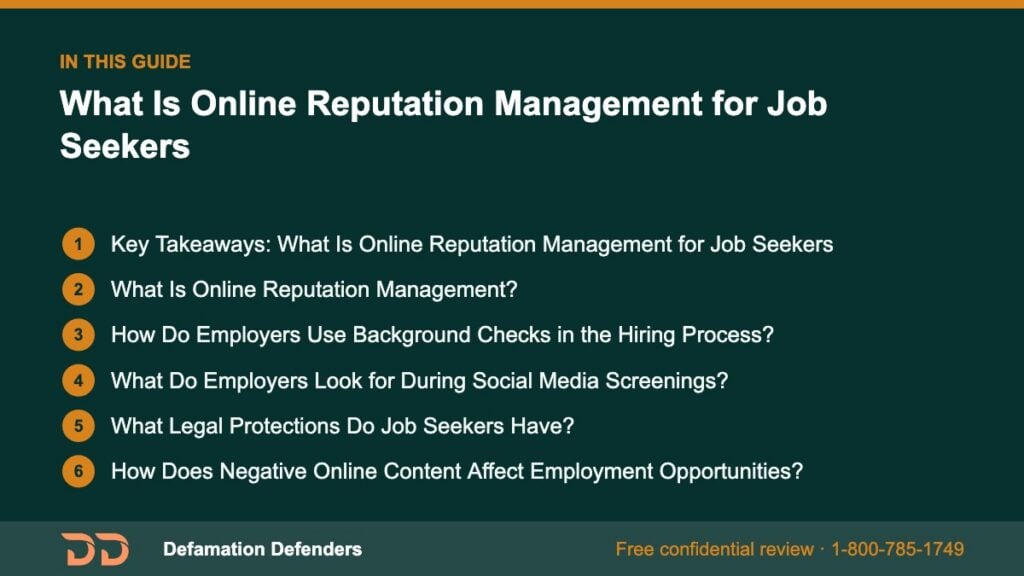
Table Of Content
Key Takeaways: What Is Online Reputation Management for Job Seekers
- Online reputation management is the practice of monitoring and influencing what appears about you on search engines and social media platforms.
- Employer background checks in the United States often include social media screenings that can impact hiring decisions significantly.
- Job seekers have legal protections under the Fair Credit Reporting Act when employers use third-party services to check their backgrounds.
- Defamation Defenders helps individuals remove negative content and improve their Google search results to protect career opportunities.
- Proactive reputation monitoring allows you to address harmful content before it affects your next job application or interview.
Want this content gone? Get a free, confidential quote.
Send us the links. Most removals are done in a few days to a few weeks, with a full refund if we can't complete the agreed removal.
What Is Online Reputation Management?
Online reputation management (ORM) is the process of influencing and controlling what appears about you on internet search results. It combines content removal, search result suppression, and positive content promotion to ensure accurate information represents you online.
For job seekers, ORM focuses on three primary areas. First, it addresses removing or suppressing negative content that could harm your employment prospects. Second, it involves monitoring your digital footprint across search engines and social platforms. Third, it includes building a positive online presence that showcases your professional qualifications.
The goal is straightforward: when someone Googles your name, you want them to find information that supports your candidacy rather than content that raises concerns.
How Do Employers Use Background Checks in the Hiring Process?
Employers in the United States conduct background checks at various stages of hiring. Traditional checks cover criminal history, employment verification, and credit reports. Digital background checks examine your social media profiles and online presence.
According to the U.S. Equal Employment Opportunity Commission, employers must follow specific rules when obtaining background reports. If they use a third-party company to compile information, they must get your written permission first. They must also notify you if they plan to take adverse action based on what they find.
Social media screenings have become a standard part of this process. Research shows that a majority of recruiters use search engines to research applicants, and many have rejected candidates based on information they discovered online.
What Do Employers Look for During Social Media Screenings?
When employers review your social media profiles, they look for specific red flags. These include discriminatory or offensive comments, references to illegal activity, violent language or behavior, and unprofessional content. They also verify whether the information on your resume matches what you post online.
Employers check multiple platforms during these screenings. LinkedIn receives the most attention as a professional network, but hiring managers also review Facebook, Instagram, X (formerly Twitter), and TikTok. They examine not only your posts but also your comments, likes, and interactions with others.
The information employers find can work in your favor too. Many hiring managers search for content that demonstrates a candidate’s qualifications, communication skills, and cultural fit with the organization.
What Legal Protections Do Job Seekers Have?
Federal law offers several protections for job seekers facing background checks. The Fair Credit Reporting Act (FCRA) requires employers to obtain your consent before ordering background reports through third-party agencies. If an employer decides not to hire you based on report findings, they must provide you with a copy of the report and a notice of your rights.
The EEOC enforces laws that prohibit employment discrimination based on race, national origin, color, sex, religion, disability, genetic information, or age. Employers cannot apply different background check standards to candidates based on these protected characteristics.
Some states have additional regulations. Certain jurisdictions limit how far back employers can look into criminal history or restrict the use of credit information in hiring decisions. Understanding your local laws can help you know your rights during the application process.
How Does Negative Online Content Affect Employment Opportunities?
Negative search results can have significant consequences for your career. Old arrest records that appear on mugshot websites, unflattering news articles, negative reviews from former employers, and defamatory posts can all surface during employer searches.
The impact extends beyond initial hiring decisions. Background checks happen during promotions, security clearances, and professional licensing applications. Harmful content that exists online can continue affecting your career for years if left unaddressed.
Defamation Defenders removes harmful content from the internet using a combination of legal takedown requests, SEO suppression techniques, and direct outreach to website operators. This approach helps job seekers regain control of their search results before those results affect their employment prospects.

What Steps Can You Take to Manage Your Online Reputation?
Start by auditing your current online presence. Search your name in an incognito browser window and review the first several pages of results. Look at what appears on Google, Bing, and social media platforms. Document any content that could raise concerns with potential employers.
Review your privacy settings on all social media accounts. Decide whether you want profiles to be public or private, and consider maintaining separate personal and professional accounts. Remove or untag yourself from photos and posts that do not reflect the image you want to project.
Build positive content that represents your professional qualifications. Create or update your LinkedIn profile with accurate employment history and skills. Consider publishing professional articles or contributing to industry discussions online. Positive content helps push less favorable results lower in search rankings.
When Should You Seek Professional Reputation Management Help?
Some situations require more than personal efforts to resolve. If defamatory content appears prominently in your search results, professional assistance can accelerate the removal process. Defamation Defenders offers reputation repair services that combine legal expertise with technical SEO knowledge to address these situations.
Mugshot removal presents another common challenge. Many websites publish arrest records and booking photos, and these pages often rank high in search results. Removing this content typically requires formal takedown requests and coordination with multiple platforms.
Attorneys working with clients who face background check challenges can benefit from understanding these options. Search result suppression and content removal services help individuals present their best professional image during the hiring process.
How Can You Monitor Your Reputation on an Ongoing Basis?
Set up Google Alerts for your name and variations of it. This free service notifies you when new content mentioning you appears online. Early awareness gives you time to address negative content before it gains traction in search results.
Review your social media privacy settings periodically. Platforms update their policies regularly, and settings that once protected your content may no longer do so. Check your profiles at least quarterly to ensure your privacy preferences remain in effect.
Consider professional reputation monitoring services for ongoing protection. Defamation Defenders uses proprietary systems to track mentions of your name across the web and alerts you when new content surfaces. This proactive approach helps you maintain control of your online presence over time.
In Conclusion: Taking Control of Your Professional Reputation
Online reputation management is an essential consideration for anyone navigating the job market in the United States. Employers routinely check search results and social media profiles as part of their hiring process, and what they find directly influences their decisions.
You can take proactive steps to manage what appears about you online. Audit your search results, adjust your privacy settings, and build positive professional content. When harmful content exists that you cannot remove yourself, professional reputation management services offer effective solutions.
The goal is to ensure that your online presence supports your career goals rather than undermining them. Taking action now protects your opportunities for years to come.
FAQs About Online Reputation Management for Job Seekers
Yes, employers in the United States can legally view your public social media profiles during the hiring process. However, they cannot discriminate based on protected characteristics like race, religion, or age that they discover through these searches. If employers use third-party services to compile reports, they must follow FCRA requirements including obtaining your written consent.
The timeframe varies by state and the type of check being conducted. Criminal background checks often go back seven years, though some states allow longer lookback periods for certain positions. Credit checks typically cover seven to ten years. Social media screenings have no standard timeframe, meaning old posts can surface if they remain publicly accessible.
Yes, if an employer uses a third-party background check company and decides not to hire you based on the results, federal law requires them to give you a copy of the report and a notice explaining your rights. You can then dispute any inaccurate information with the reporting company. Defamation Defenders helps clients identify and correct inaccurate online information before it affects their employment prospects.
Yes, if an employer uses a third-party background check company and decides not to hire you based on the results, federal law requires them to give you a copy of the report and a notice explaining your rights. You can then dispute any inaccurate information with the reporting company. Defamation Defenders helps clients identify and correct inaccurate online information before it affects their employment prospects.
First, document the content and its location. If the information is false or defamatory, you may have grounds for removal through legal channels. For accurate but unflattering content, reputation suppression techniques can push it lower in search results. Defamation Defenders combines legal takedowns with SEO strategies to address both types of situations effectively.
Timeframes vary based on the severity of the issue and the strategies used. Content removal can happen quickly if platforms comply with takedown requests. Search result suppression through SEO typically takes several months to show significant improvement. Defamation Defenders develops customized timelines based on each client’s specific situation and goals.
Related Contents:
Want this content gone? Get a free, confidential quote.
Send us the links. We'll reply with a firm quote and timeline. Most removals are done in a few days to a few weeks, with a full refund if we can't complete the agreed removal.
Pay-after-removal options · 4,000+ clients served · 4.9/5 on Google
Prefer to talk? Call 1-800-785-1749
