

Sharing an intimate image of someone without their consent is against the law across the United States. A federal criminal law, a federal civil lawsuit and a patchwork of state statutes all apply, and since 2025 the major platforms have been legally required to take such images down within 48 hours of a valid request. The law gives you a claim. The practical problem is getting the images off every site and out of search results, and that is the part we handle for our clients at Defamation Defenders.
This guide explains the laws in plain terms, what they mean if the image is of you, and the order to do things in.
Table Of Content
TL;DR
- The federal TAKE IT DOWN Act makes it a crime to knowingly publish, or threaten to publish, an intimate image of an identifiable person without consent. That includes AI-generated fakes.
- Covered platforms must remove a reported image, and known identical copies, within 48 hours of a valid written request.
- All 50 states and D.C. have some criminal or civil law on the subject. Penalties and civil damages vary widely by state.
- You can sue under federal law for actual damages or $150,000 in liquidated damages, plus attorney’s fees.
- Preserve evidence first, then report and request removal. Search results and copies on other sites need their own requests.
Want this content gone? Get a free, confidential quote.
Send us the links. Most removals are done in a few days to a few weeks, with a full refund if we can't complete the agreed removal.
Table of Contents
- What counts as a nonconsensual intimate image
- The federal TAKE IT DOWN Act
- State laws: 50 states, many differences
- Can you sue?
- What about photos taken without permission?
- What to do first if an image of you is online
- Why removal is the hard part
- Our view: law and removal work best together
- Get the content removed with us
- FAQ
- Sources
What counts as a nonconsensual intimate image
The Justice Department’s Office on Violence Against Women defines consent as a conscious, voluntary agreement free from force, fraud, misrepresentation, or coercion. It also makes a point many people miss: agreeing to be photographed, or sending a picture to one person, is not consent to have it shared anywhere else. You can show a lack of consent with your own testimony or other evidence.
The terms you will see used for the same problem include nonconsensual intimate images (NCII), image-based abuse, and the older phrase “revenge porn.” They cover real photos and videos that were shared without permission, and, under newer laws, synthetic images known as deepfakes or “digital forgeries.”
The federal TAKE IT DOWN Act
Congress passed the TAKE IT DOWN Act (S. 146) on April 28, 2025, and the President signed it on May 19, 2025, according to the Congressional Research Service summary. It does two things.
It creates federal crimes
The Act sets out seven offenses: publishing authentic intimate images of adults or of minors, publishing digital forgeries of adults or of minors, and making threats involving either kind of image. According to the same CRS summary, the maximum penalties include fines and:
- up to 2 years in prison for publishing images of adults;
- up to 3 years where the victim is a minor;
- up to 18 months (30 months for minors) for threats involving digital forgeries;
- forfeiture of property connected to the offense.
It forces platforms to act
Covered platforms had to set up a notice-and-removal process by May 19, 2026. Under 47 U.S.C. § 223a, once a platform gets a valid written request it must remove the depiction as soon as possible and no later than 48 hours afterward. It must also make reasonable efforts to remove known identical copies. Platforms must post a plain-language explanation of how to ask.
A valid request has to include:
- A physical or electronic signature, from you or someone authorized to act for you.
- Enough information for the platform to find the image, usually the exact URL.
- A good-faith statement that the image was published without your consent.
- Your contact information.
The Federal Trade Commission enforces the platform duties. A 2026 guide to the process reports that enforcement began on May 19, 2026, with civil penalties of $53,088 per violation, and that you can file a free FTC complaint if a platform misses the 48-hour window or has no process at all.
Two limits matter in practice. The Act covers platforms that fall under its definition, so a small standalone site, an offshore forum or a site that ignores US law may not respond. And it works URL by URL: a platform removes what you point to, not every copy across the web.
State laws: 50 states, many differences
The federal Act does not replace state law. According to WashU Law’s AI policy resources, it does not preempt state intimate-image laws, and many states have extended theirs to AI-generated images.
All 50 states and Washington, D.C. have some form of criminal or civil law on nonconsensual intimate images, according to Operation Safe Escape’s toolkit. The PEN America field manual notes that D.C. and 48 states have criminal statutes, and that a majority of states require intent to harm. Where a state has no specific statute, the conduct may still be prosecuted under other laws, as the National Resource Center on Cybercrimes explains on its state-by-state map.
A few examples show how much the details differ:
| State | Criminal treatment | Civil remedies |
|---|---|---|
| New York | Class A misdemeanor under Penal Law § 245.15 | Civil Rights Law § 52-b allows compensatory and punitive damages, an injunction, attorney’s fees and a court order for sites to remove images |
| California | Misdemeanor, with enhanced penalties for repeat offenses or minor victims | Statutory damages for deepfake pornography rose in 2026 to $1,500 to $50,000, and up to $250,000 with malice |
| Florida | Criminal statute with a built-in civil claim | The greater of $10,000 or actual damages, plus punitive damages, under § 784.049(7) |
| North Carolina | Criminal statute with a built-in civil claim | Liquidated damages of the higher of $1,000 per day or $10,000 under § 14-190.5A(g) |
The damages figures for Florida and North Carolina come from Recording Law’s 2026 state survey, which found that 32 of 51 jurisdictions have a state civil cause of action.
Recent changes by state
States keep updating their laws, mostly to cover AI-generated images:
- Washington: a 2024 law criminalizes disclosing a fabricated intimate image when the discloser knows or should know it would cause harm.
- Oregon: HB 2299 brought digital depictions into the statute on January 1, 2026.
- Tennessee: laws effective July 1, 2025 closed a loophole so anyone who shares private intimate images without consent is liable, even if they were not part of the original agreement. They also made sharing harmful AI deepfakes a felony.
- South Dakota: SB 41 added computer-generated intimate images to its statute, in force since July 1, 2026.
Because these rules change, check your own state’s current statute or ask a lawyer licensed there before relying on a specific penalty.
Can you sue?
Yes. Federal law gives you a civil right of action under 15 U.S.C. § 6851, added by the Violence Against Women Reauthorization Act of 2022. If your intimate image was disclosed without consent in or affecting interstate commerce, you can sue a person who knew, or recklessly disregarded, that you had not consented. You may recover actual damages or $150,000 in liquidated damages, plus costs, attorney’s fees and injunctive relief.
The statute also says:
- consent to create an image, or to share it with one person, is not consent to further distribution;
- a court may let you use a pseudonym to protect your anonymity;
- there are exceptions for commercial pornography (unless it was produced by force, fraud, misrepresentation or coercion), good-faith reports to law enforcement, legal proceedings, medical care and matters of public concern.
One gap to know about: the CRS notes it is unsettled whether this federal action covers digitally created or altered images. State civil laws, such as California’s, often fill that gap for deepfakes.
A lawsuit punishes the person who posted. It does not by itself take the image off the internet, which is why most people pursue removal alongside any legal claim. To bring a claim, talk to an attorney. A lawyer can tell you which state and federal claims fit your facts and deadlines. New York’s civil statute, for example, has a limitations period of three years from dissemination or one year from discovery, whichever is later.
What about photos taken without permission?
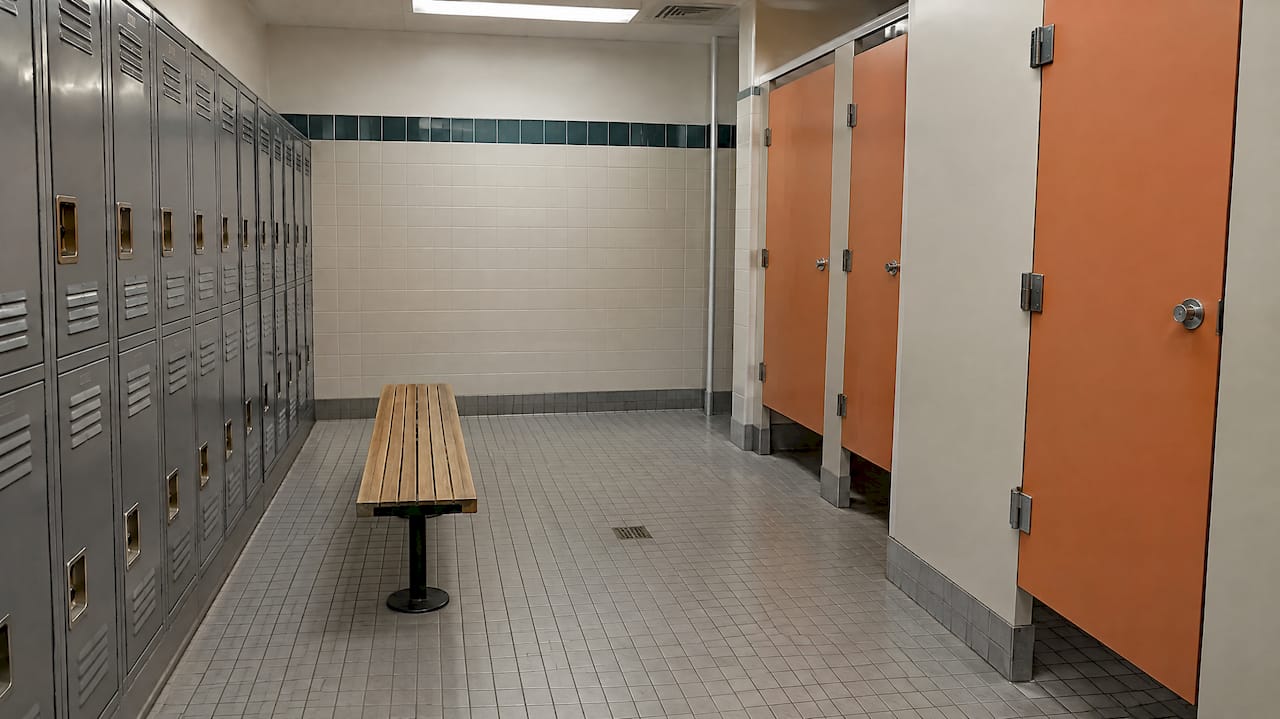
Taking a photo is a separate question from sharing an intimate one. In general, you can be photographed in a public place, because your expectation of privacy there is very limited, as FindLaw explains. You can reasonably expect privacy in your home, a changing room, or a gym locker room. Secretly photographing someone in those places can be a crime under state voyeurism laws. If an intimate image was taken secretly, or shared after being taken with consent, the laws above apply to the sharing.
What to do first if an image of you is online
Order matters. These steps protect both your case and your privacy.
1. Preserve evidence before anything comes down
The Cyber Civil Rights Initiative warns that if images are removed before legal professionals collect digital forensic data, crucial evidence could be destroyed. If it is safe to do so, save:
- screenshots showing the page, URL, date and time;
- account names, usernames and handles;
- threats, messages and any payment demands;
- the time zone of each capture.
RAINN’s guidance and the Safe Harbor Advisory removal kit give similar lists. If you were under 18 when the image was made, do not download, forward or copy it. Record the links and non-explicit details only, and report to the National Center for Missing & Exploited Children’s CyberTipline.
2. Report to the platform and, if you wish, to police
Use the platform’s removal form, and cite the TAKE IT DOWN Act with the four required elements. If you are being threatened or blackmailed, contact law enforcement. The Cyber Helpline advises reporting before content is removed so evidence is not lost, and not engaging with the person threatening you.
3. Keep a removal log
Record each URL, the platform, the submission date and time zone, any case number, a copy of your request, the response and a follow-up date. The Safe Harbor kit also notes that search results and source pages need separate requests.
4. Escalate when the 48 hours pass
If a covered platform has not acted 48 hours after your valid request, file a complaint with the FTC.
Why removal is the hard part
The law fixes who is responsible. It does not clear the internet. In real cases the same image appears on a mainstream platform, on a mirror site, on a forum thread and in Google results, each with its own rules and its own contact. Many of the worst hosts sit outside the Act’s reach, and a missed duplicate can bring the image back to the top of a search for your name.
That is where we work. Defamation Defenders removes leaked images, videos and personal information from websites and search results. We have guides on removing naked pictures from the internet, removing leaked private photos, reporting leaked personal content, and removing personal content from revenge websites. For a single social post, see our page on getting a post removed from Instagram.
Our view: law and removal work best together
Most people who contact us have already read the statute and know they were wronged. What they need is for the image to stop being findable, and quickly.
Our approach is built around that. We start with a free evaluation, give a firm written quote before any work begins, and assign a dedicated project advisor so you deal with one person, confidentially, instead of chasing a dozen hosts yourself. Our pay-after-removal model means you pay when the agreed content is removed.
The law gives you leverage, and we use it with the practical side: removal requests to sites, deindexing from Google and suppression of what remains. Preserve your evidence first, speak to an attorney about any claim, and let us take the removal work off your hands.
the author
Get the content removed with us
Our Content Removal Services cover images and video, personal information, social media threads and more. Clients pay after the agreed content is removed, eligible projects carry a money-back guarantee, and payment plans are available. Your evaluation is free and confidential.
If copies keep surfacing in search, our Google Deindexing Service targets the results themselves, and Search Result Suppression starts from $500 per month. For ongoing protection of your personal details, personal information removal and monitoring starts from $49 per month. You can start from our home page.
FAQ
Is it a federal crime to share intimate images without consent?
Yes. The TAKE IT DOWN Act, signed May 19, 2025, makes it a federal crime to knowingly publish or threaten to publish an intimate image of an identifiable person without consent. That includes AI-generated forgeries. Penalties for adult victims include fines and up to 2 years in prison.
Does the law cover AI-generated or deepfake images?
The TAKE IT DOWN Act does, as it covers digital forgeries. Many states have also extended their laws to AI images, including California, Washington, Oregon, Tennessee and South Dakota. The federal civil lawsuit under 15 U.S.C. § 6851 is unsettled for altered images, so state law matters here.
How fast must a website remove a reported image?
A covered platform must remove it no later than 48 hours after a valid written request, and make reasonable efforts to remove known identical copies. If it does not, you can file a complaint with the FTC. Sites outside the Act’s reach may need a different approach.
Can I stay anonymous if I sue?
Often, yes. Under the federal civil statute, courts may allow a plaintiff to use a pseudonym to preserve anonymity. Ask your attorney how this works in the court where you would file.
Sources
- Office on Violence Against Women: Sharing of Intimate Images Without Consent
- Congressional Research Service: The TAKE IT DOWN Act
- 47 U.S.C. § 223a
- 15 U.S.C. § 6851
- How to File a Take It Down Request
- Revenge Porn Laws by State (2026)
- Operation Safe Escape: Nonconsensual Pornography Toolkit
- PEN America: State Laws & Online Harassment
- National Resource Center on Cybercrimes: State & Territory Laws
- WashU Law: Explicit Images
- Revenge Porn Laws by State: Penalties and Civil Remedies
- California Deepfake Laws 2026
- Washington deepfake law guide
- Oregon deepfake law guide
- South Dakota deepfake law guide
- Tennessee Star: New Tennessee Laws Crack Down on Non-Consensual Image Sharing
- RAINN: Report Intimate Images, Deepfakes, & Fake Nudes
- Nonconsensual Intimate Image Removal Kit
- Cyber Civil Rights Initiative: Get Help Now
- The Cyber Helpline: Revenge porn guide (USA)
- FindLaw: Can Someone Take My Photo Without Permission?
Recommended
- What to Do If Someone Posts Your Picture Without Consent
- Remove Leaked Private Photos: Take Control and Protect Your Privacy
- How to Get Naked Pictures Removed from the Internet | Legal Strategies
- 2026 NSFW Content Removal Guide | How to Delete Explicit Content & Reclaim Privacy
Made with BabyLoveGrowth’s technology
Want this content gone? Get a free, confidential quote.
Send us the links. We'll reply with a firm quote and timeline. Most removals are done in a few days to a few weeks, with a full refund if we can't complete the agreed removal.
Pay-after-removal options · 4,000+ clients served · 4.9/5 on Google
Prefer to talk? Call 1-800-785-1749
