
Estimated reading time: 6 minutes
Understanding the Landscape of Online Reviews
In an era where online perception can make or break a business, Google reviews play a significant role in shaping consumer trust and search visibility. With over 90% of users reading online reviews before purchasing or visiting a business, it’s no surprise that some companies consider buying Google reviews as a quick fix for their reputation problems. But does this tactic really work—or could it backfire and damage your brand permanently?
Need help with this? Our Google review removal service can handle it for you, starting with a free, confidential review and a firm quote before any work begins.
This comprehensive guide explores the truth behind paid reviews, highlights the risks, and offers safer, more sustainable alternatives for building your reputation online.
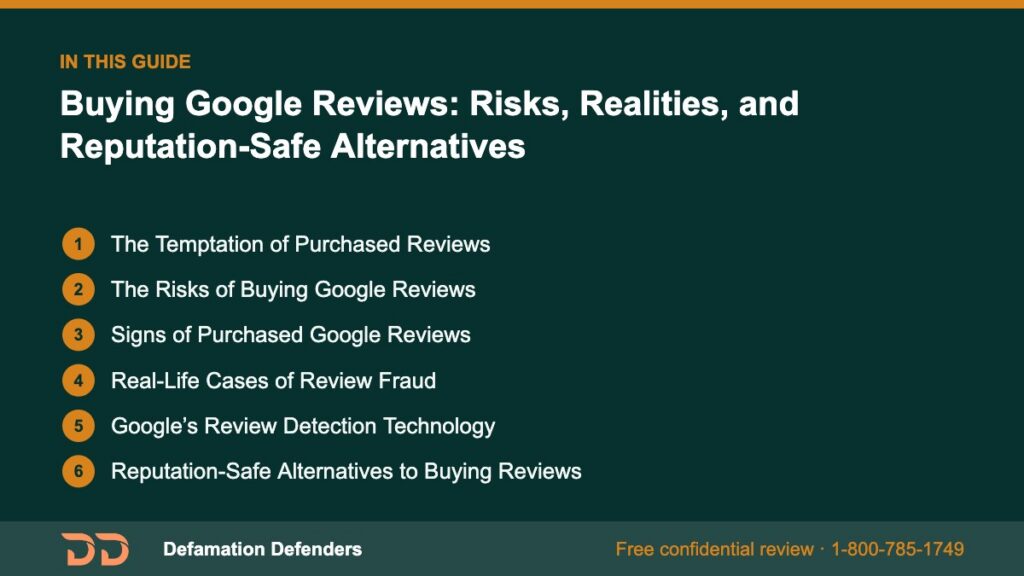
Table Of Content
The Temptation of Purchased Reviews
Why Businesses Are Drawn to Fake Reviews
Positive Google reviews can:
- Increase local search rankings.
- Boost consumer confidence.
- Drive more foot traffic and leads.
- Offset previous negative feedback.
For new or struggling businesses, the appeal of buying five-star reviews can be strong. Vendors across various platforms promise quick boosts in reputation with minimal effort. However, beneath the surface lies a dangerous gamble.
Want this content gone? Get a free, confidential quote.
Get unfair or fake reviews removed. Free assessment, no upfront fee on pay-after-removal cases, and most removals resolve within a few days to a few weeks.
The Risks of Buying Google Reviews
Violation of Google’s Terms of Service
Google strictly prohibits incentivized or fake reviews. According to Google’s review policies, posting false content or using deceptive tactics to manipulate reviews is a serious violation that can lead to:
- Account suspension
- Review removal
- Reduced visibility on local search
- Complete delisting from Google Maps
Legal Ramifications
In the United States, the Federal Trade Commission (FTC) considers the buying and selling of fake reviews a deceptive practice. Businesses caught engaging in these practices have faced:
- Fines up to hundreds of thousands of dollars
- Court orders to cease operations
- Public exposure and loss of trust
A 2019 FTC settlement with cosmetic brand Sunday Riley serves as a stark warning: the brand was accused of posting fake reviews and instructing employees to do the same. This resulted in long-term reputational damage despite legal settlements.
Damage to Credibility
Consumers are savvier than ever. If a review appears suspicious or if several fake-sounding testimonials are posted in a short span, red flags go up. This can lead to:
- Reduced trust in your brand
- Lower click-through rates
- Bad publicity on social media
- Public backlash from watchdog sites like FakeReviewWatch
Permanent Harm to SEO
Google’s algorithms are highly adept at identifying patterns of fake engagement. Sudden spikes in reviews, shared IP addresses, or duplicate content can trigger penalties that tank your local SEO.
Signs of Purchased Google Reviews
Some red flags include:
- Reviewers with no profile pictures or history
- Similar writing patterns across reviews
- High volume of reviews posted on the same day
- Overuse of certain keywords
- Vague, overly positive language
A single audit from Google’s automated systems—or even a consumer report—can trigger an investigation that wipes out months or years of perceived credibility.
Real-Life Cases of Review Fraud
The Amazon Scandal
While Amazon is a separate platform, their 2020 crackdown on fake reviews exposed the massive scale of review farms. Over 200 million fake reviews were purged, many of which were cross-posted on Google and Yelp by the same vendors.
Small Business Backlash
Numerous small businesses have been outed in community forums like Reddit or Yelp Talk for suspicious reviews. Public scrutiny can rapidly escalate and lead to local boycotts.
Google’s Review Detection Technology
How Google Spots Fake Reviews
Google uses:
- IP tracking
- Behavior pattern recognition
- Language model analysis
- Cluster detection
- Machine learning with account activity logs
Even if you purchase reviews that seem legitimate, Google’s systems continuously evolve and often remove them weeks or months after posting.
Reputation-Safe Alternatives to Buying Reviews
1. Ask Genuinely Satisfied Customers
Encourage reviews with:
- Follow-up emails after a purchase
- In-store signage with QR codes
- Personalized thank-you messages
2. Create a Review Culture
Train your staff to:
- Ask for feedback during positive moments
- Explain the impact of reviews to customers
- Offer excellent service that naturally earns 5-star feedback
3. Optimize Your Google Business Profile
Ensure that your Google profile is:
- Completely filled out
- Updated regularly with hours, images, and contact info
- Integrated with posts, events, and messaging
4. Respond to All Reviews
Replying to reviews—positive or negative—shows engagement and boosts your visibility. Google’s own support guidelines suggest that responses can positively influence prospective customers.
5. Use Online Reputation Management Services
Instead of risking everything by buying fake reviews, work with professional services like Defamation Defenders. We offer:
- Legal takedown support for fake and defamatory reviews
- Suppression of harmful search results
- Review strategy consulting
- Profile optimization for review generation

The Psychology Behind Real Reviews
Studies show that consumers trust reviews that:
- Are detailed and specific
- Include both pros and cons
- Use natural language and context
- Are recent and verified
Faking these nuances is hard—and increasingly detectable by AI-powered moderation tools.
The Role of Review Platforms in Enforcement
Besides Google, platforms like:
- Yelp use automated filters to suppress suspicious reviews.
- TripAdvisor employs fraud detection teams.
- Better Business Bureau (BBB) verifies reviews manually.
Collaborative reporting and partnerships between platforms continue to improve fraud detection.
The Business Case for Authentic Reputation Building
Authentic reviews:
- Have longer shelf life
- Build brand loyalty
- Enhance customer relationships
- Attract higher-converting leads
They’re also immune to retroactive purging—a growing trend in Google’s fight against manipulation.
Defamation Defenders: Your Trusted Reputation Ally
At Defamation Defenders, we understand the pressure of managing a brand’s reputation online. Our tailored services help businesses thrive without shortcuts or shady tactics. Whether you’ve been hit by fake reviews, struggling to build organic feedback, or need to rebuild trust, our solutions are:
- Legally sound
- SEO-friendly
- Industry-approved
- Confidential and effective
📞 Connect with our experts today for a free consultation.
FAQ: Buying Google Reviews & Safer Alternatives
Yes, it violates Google’s policies and may break FTC advertising laws.
Yes. You can flag them via your Google Business dashboard, or hire professionals to assist with removal.
Some may stay up for weeks, but most get flagged eventually.
Absolutely. Requesting honest feedback from real customers is legal and encouraged.
You risk Google penalties, FTC action, and long-term damage to your brand.
There’s no perfect number, but consistent growth and diversity in feedback is key.
Yes, we specialize in removing fake, defamatory, and spam reviews.
Related Contents:
Want this content gone? Get a free, confidential quote.
Get unfair or fake reviews removed. Free assessment, no upfront fee on pay-after-removal cases, and most removals resolve within a few days to a few weeks.
Pay-after-removal options · 4,000+ clients served · 4.9/5 on Google
Prefer to talk? Call 1-800-785-1749
