
Estimated reading time: 7 minutes
Updated October 2026 to reflect the TAKE IT DOWN Act, Google’s latest removal tools, and current platform processes.
Finding your private photos or videos online without your consent is frightening. The good news is that you have more ways to get them removed than ever before. A federal law now requires many platforms to take down non-consensual intimate images within 48 hours, and Google has made it easier to remove explicit images from search.
This guide walks you through what to do, in order, so you can get the content taken down, stop it from spreading, and protect yourself going forward.
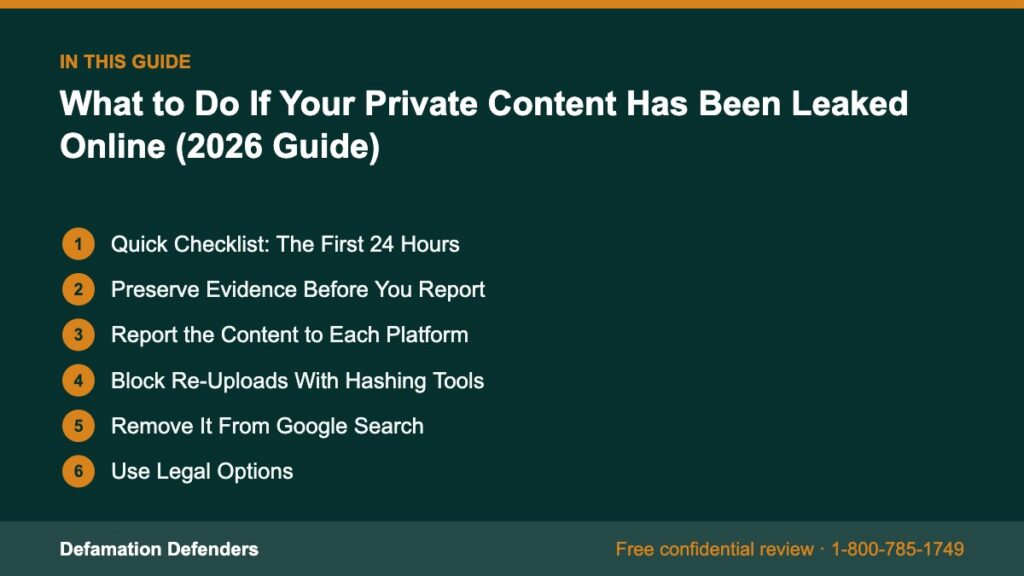
Table Of Content
Quick Checklist: The First 24 Hours
- Do not contact, threaten, or pay the person who posted it.
- Save evidence: every URL, screenshots, usernames, and any messages.
- Report each post to the platform it is on.
- Create a hash with StopNCII.org (adults) or NCMEC Take It Down (under 18 in the images) to block re-uploads on participating platforms.
- Request removal from Google search results.
- If you are being threatened or extorted, report it to police and the FBI.
Step 1: Preserve Evidence Before You Report
Content can disappear once it is reported, so document it first. You will need this record for takedown requests, police reports, and any legal claim.
- The exact URL of every post, not just the website name
- Full-page screenshots showing the content, date, and the uploader’s username
- Any messages, threats, or demands from the person who shared it
- The platform, hosting company, or file-sharing service involved
Store the evidence somewhere private, such as an encrypted folder. You do not need to keep copies of the explicit images themselves if screenshots of the page and URL are enough to identify them.
Step 2: Report the Content to Each Platform
Every major platform bans non-consensual intimate imagery. Use the platform’s own reporting tool and choose the option for private or non-consensual content.
- Facebook and Instagram: report the post, then select nudity or sexual activity and “involves me”
- X (Twitter): use the private information and media report form
- Reddit: report the post as non-consensual intimate media
- TikTok: report the video under nudity and sexual activity
- Telegram and Discord: report the message or channel and email their abuse teams
When you report, link the exact post, state clearly that it was shared without your consent, and keep the tone short and factual.
The TAKE IT DOWN Act
Since May 2026, the Federal Trade Commission has enforced the TAKE IT DOWN Act. Covered platforms must remove non-consensual intimate images, including AI-generated deepfakes, within 48 hours of a valid request from the person shown, and make reasonable efforts to remove identical copies. If a platform ignores a valid request, that can be reported to the FTC.
Typical Platform Response Times
| Where it is posted | Typical response |
|---|---|
| Large social platforms covered by the TAKE IT DOWN Act | Within 48 hours of a valid request |
| Google Search removal requests | A few days to a couple of weeks |
| Smaller websites and forums | Varies, often days to weeks |
| Offshore or anonymous sites | Weeks, often needs escalation to the host |
Step 3: Block Re-Uploads With Hashing Tools
StopNCII.org lets adults create a digital fingerprint (hash) of an image on their own device. The image never leaves your phone or computer. Participating platforms use the hash to detect and block the content. If the person in the images was under 18, use NCMEC’s Take It Down tool instead.
Step 4: Remove It From Google Search
Even if a website will not delete the content, Google can remove it from search results. Google’s request process for non-consensual explicit imagery covers real and AI-generated images, and approved requests can also filter similar explicit results for searches about you.
If you created or own the content, a copyright (DMCA) removal request to Google is another option. Our DMCA takedown guide explains how it works, and our Google deindexing service can handle it for you.
Step 5: Use Legal Options
- DMCA takedown notices if you took the photos or videos yourself
- State NCII laws: nearly every state now makes sharing intimate images without consent illegal, and many allow you to sue
- The federal civil remedy that lets victims sue the person who shared intimate images without consent
- Restraining or protective orders if there is stalking, harassment, or threats
- GDPR right to erasure if you live in the EU or UK
The Cyber Civil Rights Initiative runs a free helpline and lists laws by state. For legal action, speak with an attorney in your state.
Step 6: Report Threats and Extortion
If someone is threatening to share more content unless you pay or send more images, that is sextortion. Do not pay and do not keep negotiating. Save the messages, block the person, and report it to local police and the FBI’s IC3. If a minor is involved, report to the NCMEC CyberTipline. Our guide on handling online blackmail has more detail.

Step 7: Push Down What You Can’t Remove
If a link cannot be removed, you can make it much harder to find. Building strong, positive results for your name, such as professional profiles, a personal website, and published articles, pushes unwanted results down in Google. Our search result suppression service does this for you.
Step 8: Monitor for New Copies
Leaked content is often copied to new sites. Set up Google Alerts for your name, run regular reverse image searches with Google Lens or TinEye, and check new results quickly. For hands-off coverage, our reputation monitoring service watches for re-uploads and removes them.
When to Get Professional Help
If the content is on many sites, keeps coming back, involves an offshore site, or is affecting your job or safety, a removal team can save you weeks of work. Defamation Defenders has helped clients since 2016 and has removed more than 17,000 links. We:
- Find every copy across websites, forums, social media, and search engines
- Prepare and submit takedown and removal requests on your behalf
- Escalate to hosts and registrars, and work with partner attorneys when needed
- Remove results from Google and Bing
- Monitor for re-uploads after the initial cleanup
Every case starts with a free, confidential review and a firm quote. Pay after removal is available on qualifying cases, and agreed removals are backed by a money-back guarantee. Learn more about our leaked content removal service or call 1-800-785-1749.
How to Protect Yourself From Future Leaks
- Turn on two-factor authentication for email, cloud storage, and social accounts
- Turn off automatic cloud backup for sensitive photos, or use encrypted storage
- Avoid sending intimate images through apps without end-to-end encryption
- Keep personal and anonymous accounts separate
- Search your name and images regularly
FAQ: What to Do If Private Content Is Leaked
How fast can leaked private content be removed?
It depends on where it is posted. Major platforms often act within a few days of a valid report, and platforms covered by the TAKE IT DOWN Act must remove non-consensual intimate images within 48 hours of a valid request. Smaller or offshore sites can take weeks and may need escalation to their hosting provider.
Can AI-generated deepfakes be removed the same way?
Yes. Sexually explicit deepfakes are covered by the TAKE IT DOWN Act, most platform policies, and Google’s removal process for non-consensual explicit imagery. See our deepfake removal page for details.
What if the website is hosted outside the U.S.?
Removal is harder but often possible. Many offshore hosts and registrars still act on abuse and copyright complaints, and Google can remove the page from search results even when the site itself refuses.
Should I pay someone who is threatening to leak more content?
No. Paying rarely stops the threats and often leads to more demands. Stop responding, save the messages, and report it to the FBI at IC3.gov and to local police.
What if the person in the content was under 18?
Report it right away to the NCMEC CyberTipline. Minors and adults who were minors in the images can also use NCMEC’s free Take It Down tool to create hashes that participating platforms use to find and remove the content.
Will reporting the content make it spread more?
No. Reporting goes to the platform, not to the public. Acting quickly limits how many sites copy the content.
Can Defamation Defenders help if the content keeps coming back?
Yes. We remove new copies as they appear and offer ongoing monitoring so re-uploads are found early.
What if I can’t afford a lawyer?
Many removal steps do not need a lawyer. Free help is available from the Cyber Civil Rights Initiative helpline, and Defamation Defenders offers a free confidential review, pay after removal on qualifying cases, and payment plans.
This article is general information, not legal advice. Defamation Defenders is not a law firm. If you are in immediate danger, call 911.
