
Estimated reading time: 8 minutes
An arrest can place a person in a difficult situation, but the lingering presence of a mugshot online can create long-term consequences far beyond the legal process itself. In Iowa, booking photographs may become part of public records, meaning they can appear on various websites and in search engine results shortly after an arrest occurs.
Need help with this? Our mugshot removal service can handle it for you, starting with a free, confidential review and a firm quote before any work begins.
Even if charges are dismissed or resolved favorably, those images can continue appearing in searches for years. Employers, neighbors, and business partners often search for names online, and the presence of a mugshot can influence their perceptions.
Understanding Iowa mugshot removal options is essential for anyone seeking to regain privacy and protect their online reputation. This guide explores the legal context of mugshots in Iowa, explains how arrest photos appear online, and provides actionable strategies for removing them and restoring control over search results.
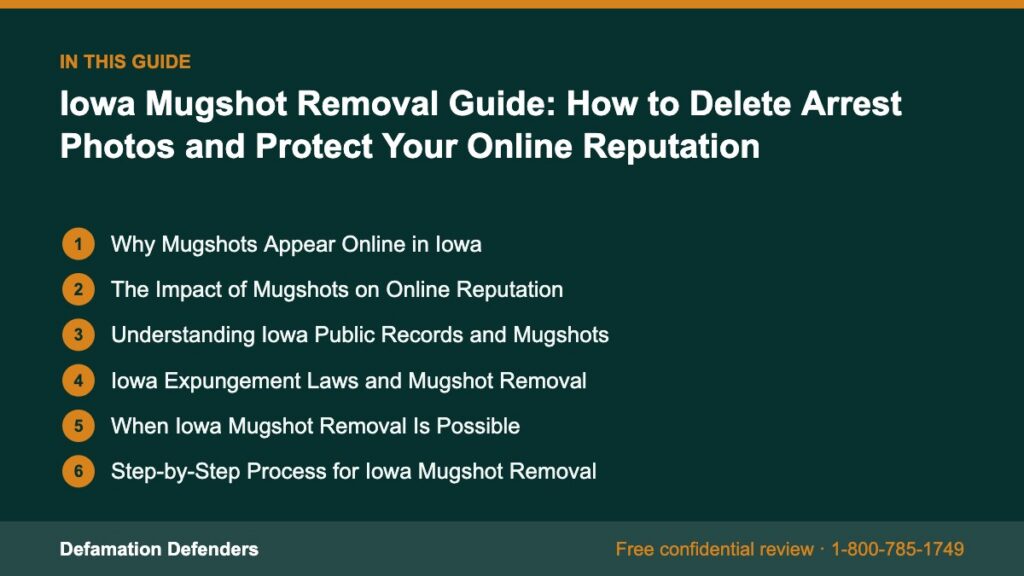
Table Of Content
Why Mugshots Appear Online in Iowa
When a person is arrested, law enforcement agencies typically record booking information including photographs, fingerprints, and arrest details. These records may be classified as public information depending on state law.
In Iowa, access to government records is governed by the Iowa Open Records Law, which allows public access to many types of government documents.
Because arrest records can be publicly accessible, several sources may display mugshots online.
Common sources of Iowa mugshots
- County sheriff department inmate rosters
- Local police department arrest reports
- Court record databases
- News reports covering arrests
- Data aggregation sites compiling public records
Once published online, these records can be indexed by search engines such as Google, making them visible when someone searches a person’s name.
This widespread accessibility is why Iowa mugshot removal has become an important issue for individuals seeking to move forward after an arrest.
The Impact of Mugshots on Online Reputation
The presence of an arrest photo online can influence how others perceive an individual. Even when someone has never been convicted of a crime, the image alone may create assumptions.
Career implications
Many employers conduct online background searches before making hiring decisions.
A mugshot in search results can raise concerns regarding:
- Professional reliability
- Trustworthiness
- Legal history
Industries particularly sensitive to reputation include:
- Healthcare
- Education
- Financial services
- Government employment
- Law enforcement
Housing and financial barriers
Property managers and lenders frequently review online search results.
Negative records may influence decisions about:
- Rental applications
- Mortgage approvals
- Loan eligibility
Social consequences
Beyond employment and housing, arrest photos can affect personal relationships and community reputation.
Individuals may face:
- Social stigma
- Loss of community trust
- Uncomfortable conversations with colleagues or neighbors
For these reasons, Iowa mugshot removal can be a critical step in restoring personal and professional stability.
Understanding Iowa Public Records and Mugshots
Before attempting removal, it helps to understand the legal framework governing public records in Iowa.
Iowa public records law
The Iowa Open Records Law (Chapter 22) establishes the public’s right to access many government documents. Arrest records and booking photos may fall within this category.
Information about court cases can also be accessed through the Iowa Judicial Branch Case Search system.
However, not all records remain permanently public.
Records that may be restricted
Some records can be sealed or restricted under specific circumstances, including:
- Juvenile cases
- Expunged records
- Cases dismissed after a waiting period
Understanding whether your case qualifies for record sealing or expungement may strengthen your ability to request mugshot removal.
Iowa Expungement Laws and Mugshot Removal
Expungement can play a key role in removing arrest information from public visibility.
Under Iowa law, certain cases may qualify for expungement if specific conditions are met.
Situations that may qualify for expungement
Examples include:
- Non-violent misdemeanors
- Charges dismissed or acquitted
- First-time offenses meeting eligibility criteria
Eligibility requirements and procedures can be reviewed through resources provided by the Iowa Judicial Branch.
When a record is expunged, it becomes inaccessible to the public, which can support removal requests sent to websites displaying the mugshot.
When Iowa Mugshot Removal Is Possible
While each situation differs, removal is commonly achievable under several circumstances.
Common qualifying scenarios
- Charges were dropped or dismissed
- The person was found not guilty
- The arrest involved mistaken identity
- The record has been expunged
- The individual completed a deferred judgment program
Even when a conviction exists, there may still be ways to reduce the visibility of arrest photos in search results.
Step-by-Step Process for Iowa Mugshot Removal
Removing mugshots from the internet typically involves several coordinated steps.
Step 1: Locate All Instances of the Mugshot
Start by searching your name in major search engines.
Use several variations:
First Last
First Middle Last
Last, First
Nicknames or alternate spellings
Create a list of every page displaying the mugshot.
Include:
- URLs
- screenshots
- publication dates
This list will help organize removal requests.
Step 2: Contact the Website Hosting the Image
Many websites provide a contact form or email address for removal requests.
When sending a request, include:
- The exact page URL
- Your full name
- proof of identity
- court documentation showing case outcomes
Professional and respectful communication often improves the chances of successful removal.
Step 3: Submit Removal Requests to Search Engines
Even after a page removes a mugshot, search engines may still show cached versions of the page.
You can request removal using tools such as:
These tools allow outdated search results to be cleared once the original content has been deleted.
Step 4: Monitor Your Search Results
Reputation management requires continuous monitoring.
Search engines may reindex older pages or new sites may publish arrest information.
Tools like Google Alerts allow you to receive notifications when your name appears online.
Step 5: Strengthen Positive Search Results
Removing negative content is only part of the process.
Creating positive, authoritative content can help ensure favorable information appears higher in search results.
Examples include:
- Professional biography pages
- LinkedIn profiles
- business websites
- published articles
- community organization involvement
Positive content builds credibility and helps control search visibility.
How Defamation Defenders Assists with Iowa Mugshot Removal
The process of removing mugshots can be complicated, particularly when multiple websites display arrest records.
Defamation Defenders provides specialized solutions designed to address these challenges.
Services include:
- Comprehensive mugshot identification
- removal request coordination
- search result suppression
- reputation restoration strategies
Through careful analysis and targeted action, the team helps individuals regain control over search results tied to their name.
You can learn more about available solutions by visiting Defamation Defenders.
Benefits of professional support
Working with experienced specialists offers several advantages:
- Faster identification of mugshot sources
- strategic communication with websites
- documentation preparation for removal requests
- ongoing reputation monitoring
For individuals dealing with widespread online records, professional assistance often provides the most efficient path toward successful Iowa mugshot removal.
Preventing Mugshots from Reappearing
After removal, taking preventative steps helps maintain long-term reputation protection.
Privacy management tips
Consider implementing the following strategies:
- Limit the amount of personal data shared publicly
- Review privacy settings on social platforms
- periodically search your name online
- maintain updated professional profiles
Reputation monitoring
Monitoring tools help detect new references quickly.
A simple monitoring workflow might look like this:
Weekly name search
Monthly review of image results
Quarterly review of public records
Annual reputation audit
Consistent monitoring ensures early detection if new information appears online.
Reputation Recovery After Mugshot Removal
Restoring reputation goes beyond removing arrest photos.
Developing a strong online presence can help shape how others perceive you.
Content development strategies
Positive search results often include:
- professional biographies
- thought-leadership articles
- conference speaking appearances
- nonprofit involvement
Creating authoritative content associated with your name helps push outdated arrest information further down in search results.

Common Mistakes During Mugshot Removal
Individuals attempting removal sometimes encounter obstacles due to common errors.
Mistake #1: Waiting too long
The longer a mugshot remains online, the more likely it is to spread across multiple sites.
Early action reduces the number of locations requiring removal.
Mistake #2: Incomplete documentation
Providing full documentation helps websites verify the legitimacy of removal requests.
Typical documents include:
- case dismissal records
- expungement orders
- identification verification
Mistake #3: Hostile communication
Professional communication improves cooperation from website administrators.
Clear and respectful requests are more likely to succeed.
Iowa Counties Where Arrest Records Frequently Appear Online
Several counties in Iowa maintain public inmate or booking records that may appear online.
Examples include:
- Polk County
- Linn County
- Scott County
- Johnson County
- Black Hawk County
Local law enforcement websites often publish booking logs or inmate lists.
These records may later appear in search engine results.
Legal Resources for Iowa Residents
Individuals seeking legal guidance regarding expungement or public records may consult these organizations.
These organizations provide educational materials, legal assistance programs, and guidance on navigating court procedures.
Advanced Strategies for Reputation Protection
Professionals specializing in reputation management often combine removal efforts with broader reputation strategies.
Authority-building techniques
Search engines prioritize credible and trustworthy sources.
Examples of authoritative content include:
- verified professional profiles
- interviews in industry publications
- academic or professional articles
Personal brand development
Developing a strong personal brand can help ensure that search results highlight professional achievements rather than past legal issues.
FAQ: Iowa Mugshot Removal
Yes. If the original page hosting the mugshot removes the image, Google can remove outdated search results through its removal request tools.
The timeframe varies depending on the website and legal documentation provided.
Yes. Documentation showing that charges were dismissed often strengthens removal requests.
Professional assistance can simplify the process when multiple websites host arrest photos or when removal requests require legal documentation.
News organizations maintain editorial independence, but some may update or remove information when presented with court documentation.
Mugshots appearing online can create serious personal and professional challenges, but effective strategies exist for Iowa mugshot removal. By identifying sources of arrest photos, submitting removal requests, strengthening positive search results, and monitoring online mentions, individuals can reclaim their privacy and rebuild their reputation.
For those seeking experienced assistance, Defamation Defenders provides comprehensive solutions designed to remove arrest photos, protect personal privacy, and help individuals regain control over how their name appears online.
Visit Defamation Defenders to learn more about available services and begin the process of restoring your reputation.
Works Cited
“Iowa Open Records Law.” Iowa Legislature, https://www.legis.iowa.gov/docs/code/22.pdf.
“Iowa Courts Online Search.” Iowa Judicial Branch, https://www.iowacourts.state.ia.us/ESAWebApp/DefaultFrame.
“Iowa Judicial Branch.” https://www.iowacourts.gov/.
“Iowa Legal Aid.” https://www.iowalegalaid.org/.
“Iowa State Bar Association.” https://www.iowabar.org/.
“Remove Outdated Content Tool.” Google Search Console, https://search.google.com/search-console/remove-outdated-content.
“Legal Removal Requests.” Google Support, https://support.google.com/legal.
