
Estimated reading time: 8 minutes
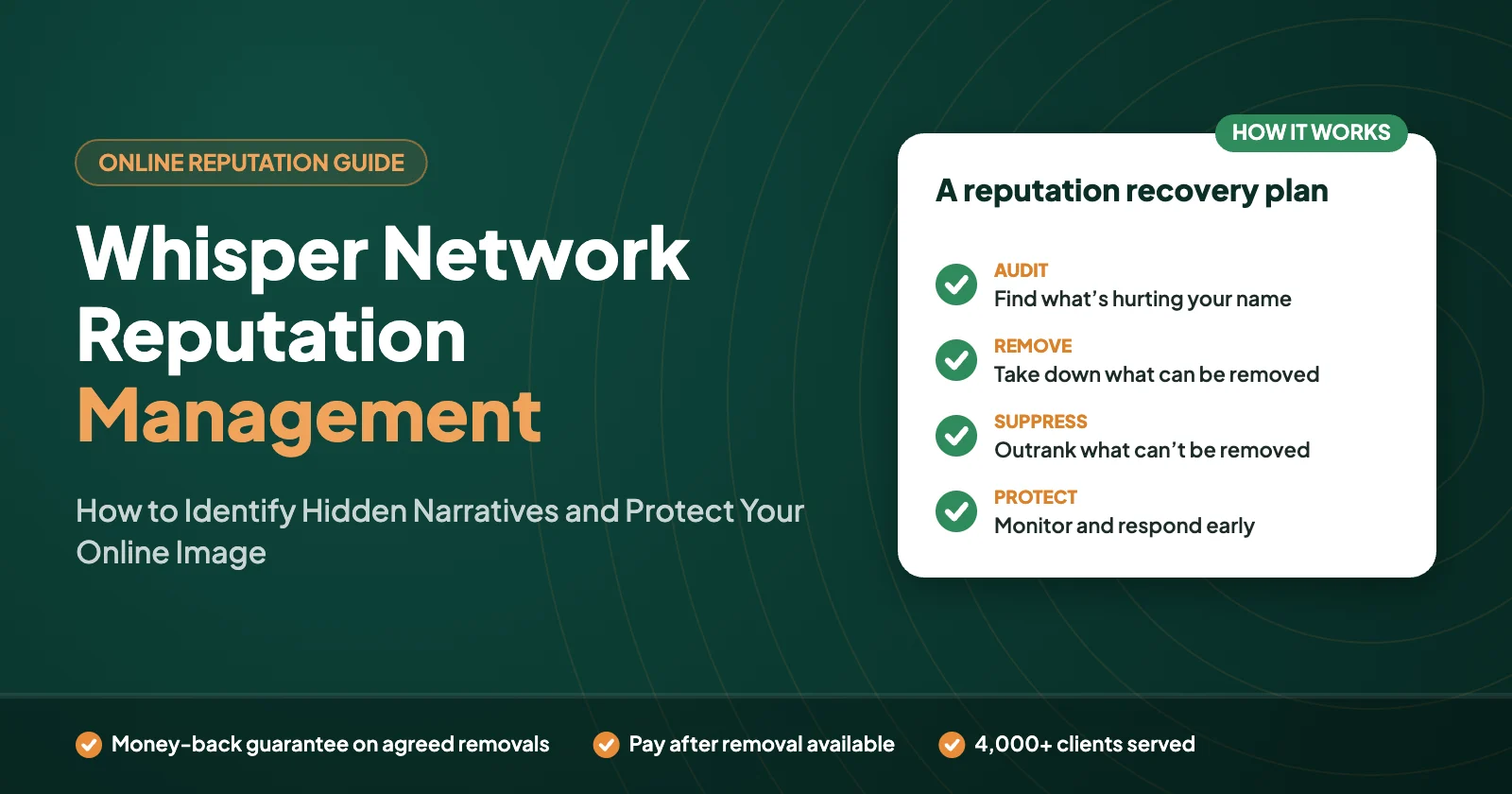
Whisper networks are often invisible, informal systems through which information, stories, and opinions circulate without public disclosure. These networks thrive in private conversations, social groups, workplace backchannels, and online spaces that do not appear in typical search results. Unlike traditional forms of online reputation issues—such as negative articles or public posts—whisper networks can operate quietly, often leaving the target unaware of the narratives being formed about them.
Need help with this? Our personal reputation repair service can handle it for you, starting with a free, confidential review and a firm quote before any work begins.
Because they rely on discreet communication and social reinforcement, whisper networks can escalate quickly, impacting professional credibility, personal relationships, career opportunities, and online presence. Whisper network reputation management requires a nuanced strategy that blends awareness, monitoring, psychological insight, legal options, communication planning, and proactive reputation building.
This comprehensive guide examines how whisper networks form, how to identify when you are the subject of one, how to intervene effectively, and how to build long-term protection strategies. You will also learn how Defamation Defenders supports clients in understanding, countering, and neutralizing whisper-based reputational harm.
Understanding Whisper Networks and Their Influence
Whisper networks are informal channels in which people share private warnings, unverified claims, impressions, or personal stories about individuals or organizations. These networks may originate with good intentions—such as sharing safety concerns—but they can also create or amplify false narratives that spiral into widespread reputational damage.
Whisper networks operate through:
- Direct messages
- Private group chats
- Community circles
- Professional networks
- Word-of-mouth exchanges
- Email chains
- Encrypted messaging platforms
- Invite-only social groups
While whisper networks rarely appear in public search results, they influence the environment in which decisions are made. A single narrative repeated within a network can become accepted truth without evidence, context, or opportunity for rebuttal.
How Whisper Networks Start and Spread
Whisper networks often emerge organically when people share information informally. They may start with:
- A personal anecdote
- A negative experience
- An opinion about someone’s character
- A rumor presented as a fact
- A misunderstood event
- A conflict between two individuals
- A misinterpretation or poor communication
- A deliberate attempt to influence perception
The spread of a whisper network typically follows recognizable patterns:
1. Origin Point
A single source introduces information—accurate or false—into a private communication channel.
2. Echoing and Reinforcement
Others repeat or add to the information, sometimes blending truth, speculation, and personal bias.
3. Social Proof Formation
Members within the group confirm the narrative simply because others believe it.
4. Behavioral Influence
People begin acting on the information, changing their treatment of the targeted individual.
5. Reputation Shift
The narrative becomes part of the individual’s perceived identity, often without their awareness.
Understanding this cycle is essential for identifying where and how to intervene.
Signs You Are the Subject of a Whisper Network
Whisper networks rarely announce themselves openly, but they leave behavioral markers. These clues suggest a narrative may be circulating:
- Sudden shifts in how colleagues or community members interact with you
- Exclusion from meetings, groups, or opportunities
- People avoiding eye contact or being unusually formal
- Declines in job responsibilities or trust
- Rumors mentioned indirectly or hinted at
- Unexpected loss of clients or partnerships
- Unexplained social distancing from peers
- Invitations or opportunities suddenly disappearing
- Confusion about why others perceive you negatively
Even subtle patterns can signal deeper underlying conversations.
Where Whisper Networks Operate Online
Although whisper networks are not typically indexed by search engines, they often take place on online platforms where messages spread rapidly and privately.
Common locations include:
- Private Facebook groups
- Slack or workplace collaboration channels
- Discord servers
- WhatsApp groups
- Telegram channels
- Text message threads
- Internal company communication systems
- Subreddit private threads
- Closed online communities
- College or alumni networks
These spaces allow narratives to spread without public visibility, making them harder to detect and address.
The Psychology Behind Whisper Networks
Whisper networks leverage social and psychological dynamics that make them powerful:
Fear of Social Repercussion
People may share rumors privately because they fear backlash for speaking openly.
Desire for Safety or Protection
Groups may feel they are helping others by “warning” them about someone.
Status and Group Loyalty
Informing others can reinforce belonging within a social group.
Confirmation Bias
Individuals accept information that aligns with their existing beliefs.
Emotional Storytelling
Emotion-driven narratives spread faster than factual explanations.
By understanding these psychological drivers, you can address narratives more strategically.
How Whisper Networks Damage Reputations
Whisper networks can be as harmful as public defamation because:
- They affect decision-making behind closed doors
- They create reputational shadows with no visible trace
- They spread quickly within communities that influence your life
- They often contain a blend of truth and falsehood
- They shape collective perception with limited facts
- They deprive you of the opportunity to respond
These networks can lead to:
- Lost job opportunities
- Professional isolation
- Social rejection
- Reputation stagnation
- Client mistrust
- Psychological stress
- Long-term narrative control issues
Proactive management is essential to prevent escalation.
How to Investigate a Whisper Network Without Escalation
Investigation must be handled carefully to avoid fueling gossip or validating rumors. Here are safe and strategic steps:
1. Identify Behavioral Patterns
Observe who is acting differently, when the behavior changed, and what triggers may be connected.
2. Use Soft Inquiry Techniques
Ask neutral questions such as:
- “I’ve noticed some shifts lately—anything I should be aware of?”
- “Has anything changed that I should address?”
Avoid confrontational approaches that may worsen narratives.
3. Gather Objective Data
Document:
- Communication patterns
- Misrepresentations
- False allegations
- Exclusion events
- Emails or chats hinting at issues
4. Seek Out Trusted Allies
Choose individuals known for discretion and neutrality. They may provide insight without compromising your position.
5. Monitor Online Activity
Set up:
- Google Alerts
- Social monitoring tools
- Internal communication monitoring (if permitted by policy)
These tools help detect when narratives surface publicly.
Legal Considerations for Whisper Network Harm
While whisper networks operate privately, some behaviors cross legal boundaries.
Potential legal issues include:
Defamation
False statements that harm reputation may be legally actionable.
Interference With Employment
Private rumors that cause job loss or blocked opportunities may qualify as tortious interference.
Harassment
Targeted whisper campaigns intended to intimidate or isolate may be harassment under state or federal law.
Discrimination
If whisper networks disproportionately affect protected classes, legal protections may apply.
Consulting legal counsel is advisable when private narratives cause measurable harm.
Strategies to Counteract Whisper Networks
Effective whisper network reputation management requires a balanced strategy that avoids escalation while rebuilding influence and credibility.
Table Of Content
Strengthen Your Public Narrative
Your strongest tool is a consistent, positive public presence. Areas to reinforce include:
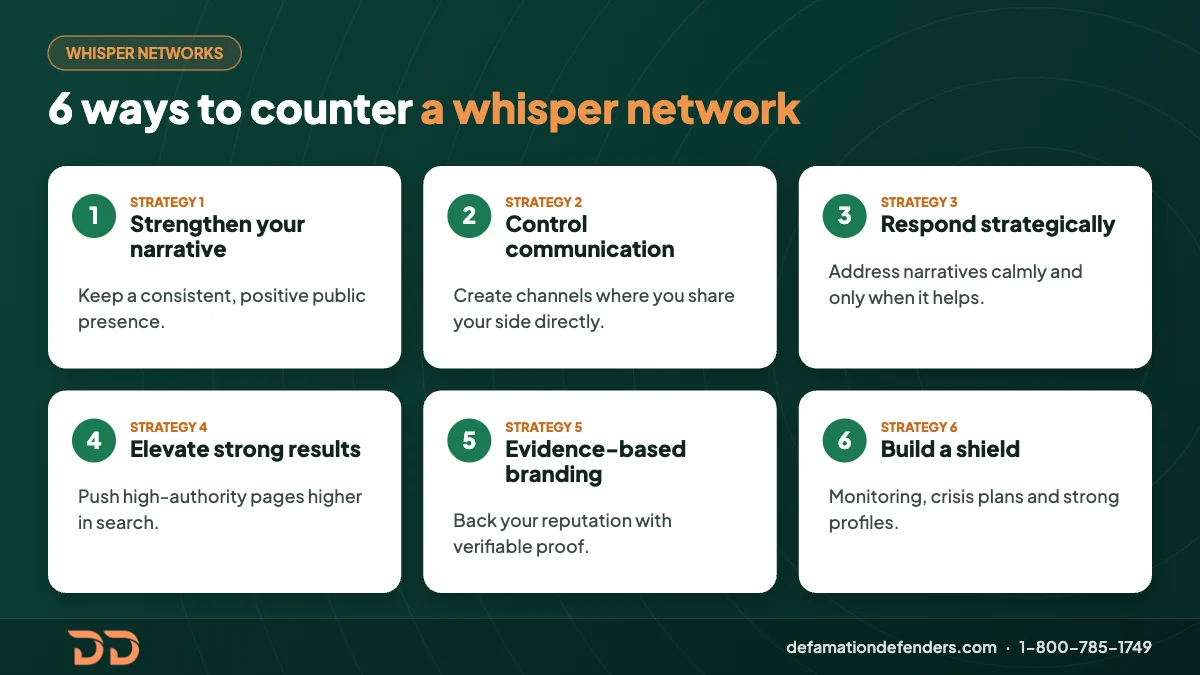
- Professional accomplishments
- Community involvement
- Thought leadership content
- Updated social profiles
- Personal website or portfolio
- Public endorsements or testimonials
Whisper networks fade when overshadowed by strong, authoritative public narratives.
Want this content gone? Get a free, confidential quote.
Send us the links. Most removals are done in a few days to a few weeks, with a full refund if we can't complete the agreed removal.
Create Controlled Communication Channels
Instead of allowing rumors to fill communication gaps, supply your own narrative:
- Publish clear, confident messages
- Share professional updates
- Address misunderstandings in a measured way
- Maintain regular communication with important contacts
Transparency builds trust and reduces space for speculation.
Respond to Narratives Strategically
Not all whisper network content should be confronted directly. Choose the appropriate category:
Category 1: Harmless or Minor Misunderstanding
Use clarification and strengthened communication.
Category 2: Factually Incorrect Information
Document inaccuracies and selectively correct the record with key individuals.
Category 3: Malicious or Reputational Attacks
Consider legal options and reputation management assistance.
Category 4: Systemic Whisper Campaigns
Professional guidance is recommended due to the complexity and sensitivity.
Reputation Reconstruction Techniques
If whisper networks have impacted your professional or personal life, rebuilding trust requires deliberate action.
Elevate High-Authority Search Results
Create or optimize:
- A personal website
- Articles or interviews
- Authoritative bios
- Thought leadership content
This strategy ensures positive results outrank any negative implications that surface later.
Develop Evidence-Based Professional Branding
Share stories rooted in:
- Achievements
- Credentials
- Skills
- Recognition
- Impactful contributions
Authentic narratives outperform rumor-based narratives.
Build a Formal Reputation Shield
A reputation shield includes:
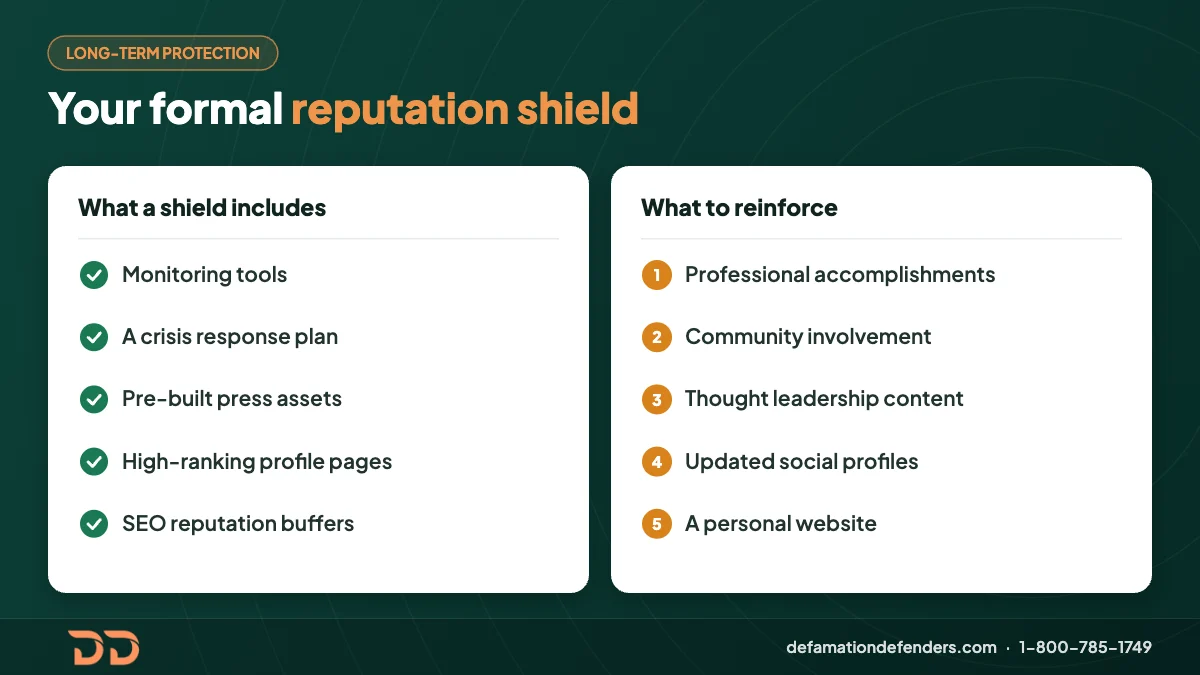
- Monitoring tools
- Crisis response plans
- Pre-built press assets
- High-ranking profile pages
- Professional SEO reputation buffers
This shield minimizes future vulnerability to whisper networks.
How Defamation Defenders Supports Whisper Network Reputation Cases
Whisper network issues require specialized handling, discretion, and strategic execution. Defamation Defenders assists clients by:

- Investigating hidden narrative sources
- Monitoring online and offline channels
- Building strategic communication plans
- Removing harmful online content
- Suppressing negative associations in search results
- Securing legal and procedural remedies
- Creating long-term reputation protection systems
Our approach ensures both immediate intervention and long-term resilience.
Request a confidential case evaluation:
https://defamationdefenders.com/contact
Frequently Asked Questions (FAQ)
A whisper network is an informal system where people privately share opinions or stories about someone. These networks influence reputation without public visibility.
If they appear publicly, yes—removal requests, legal tools, and reputation management tactics apply. Private conversations require strategic mitigation rather than removal.
Yes. When false statements harm reputation and cause measurable damage, they may qualify as defamation.
Yes—we specialize in discreet reputation management that restores credibility and neutralizes harmful narratives.
Severity varies, but consistent proactive reputation management significantly shortens the recovery period.
MLA Citations
American Psychological Association. “Group Dynamics and Social Influence.” APA.org, https://www.apa.org.
Federal Trade Commission. “Protecting Consumers from Online Harassment and Harm.” FTC.gov, https://www.ftc.gov.
Haidt, Jonathan. The Righteous Mind: Why Good People Are Divided by Politics and Religion. Vintage Books, 2013.
Google. “Remove Information from Google Search.” Google Support, https://support.google.com/websearch/troubleshooter/9685456.
Pew Research Center. “Social Media and Online Behavior Trends.” PewResearch.org, https://www.pewresearch.org.
Related Contents:
Want this content gone? Get a free, confidential quote.
Send us the links. We'll reply with a firm quote and timeline. Most removals are done in a few days to a few weeks, with a full refund if we can't complete the agreed removal.
Pay-after-removal options · 4,000+ clients served · 4.9/5 on Google
Prefer to talk? Call 1-800-785-1749
