
Estimated reading time: 6 minutes
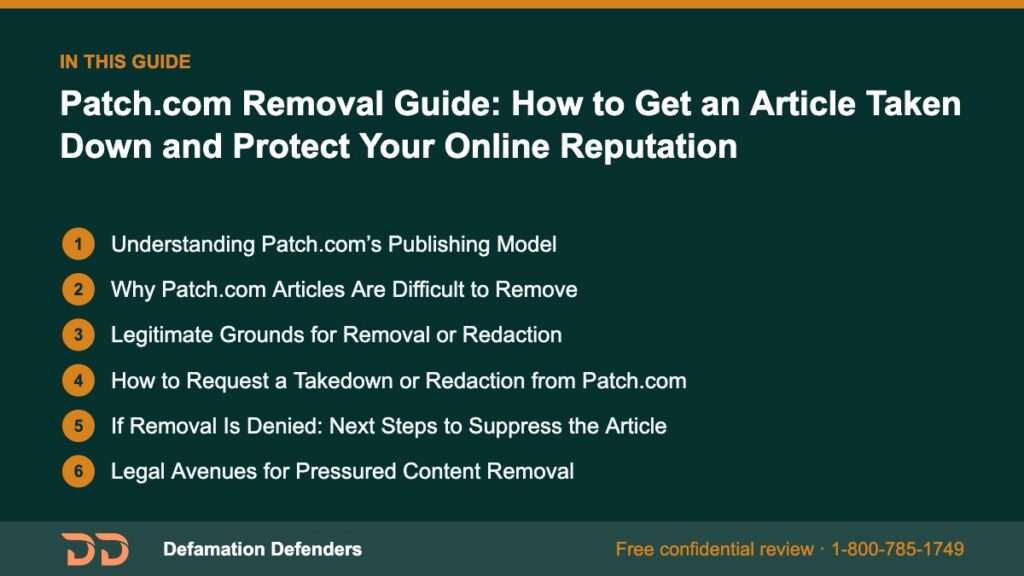
Table Of Content
Understanding Patch.com’s Publishing Model
Patch.com is a hyperlocal news platform that empowers community editors, freelancers, and contributors to post stories about local events, crime, business news, obituaries, and human-interest features. Patch’s platform is widely syndicated, and Google tends to rank its content highly, especially for queries involving personal names and geographic locations.
Need help with this? Our news article removal service can handle it for you, starting with a free, confidential review and a firm quote before any work begins.
This search engine visibility can be problematic for people named in articles related to criminal accusations, police reports, or lawsuits—even after the underlying issue is resolved. For these individuals, a negative Patch.com article is more than an embarrassment—it’s a real barrier to employment, education, and reputation recovery.
Want this content gone? Get a free, confidential quote.
Get negative news articles removed or de-indexed from Google. Free, confidential review and a firm quote before any work begins, with a full refund if we can't complete the agreed removal.
Why Patch.com Articles Are Difficult to Remove
Patch operates as a legitimate journalistic outlet and upholds editorial standards similar to mainstream news organizations. This means they often decline requests to remove or alter content unless there is:
- A factual error
- A legal reason compelling them to do so
- A significant safety concern
Patch is protected under the First Amendment and Section 230 of the Communications Decency Act, which gives platforms immunity from liability for user-submitted or publicly available content.
Nevertheless, there are pathways available for individuals seeking removal, correction, or suppression of an unwanted article.
Legitimate Grounds for Removal or Redaction
1. Expungement or Record Sealing
Court-ordered expungements are one of the strongest justifications for requesting content removal. If your criminal record has been expunged or sealed, Patch may consider redacting your name or removing the article altogether.
Key documents to include:
- Certified expungement order
- Docket summary showing resolution of case
- Signed statement from your legal counsel
2. Factual Inaccuracy or Journalistic Error
If the article contains factual errors—such as incorrect charges, misspelled names, or conflation of individuals—Patch editors are often responsive to correction requests.
3. Public Safety Concerns
Threats, harassment, or doxxing that arise after an article is published may qualify as a reason for content modification. For example, if a mugshot or address included in the article leads to threats or stalking, editors may take down or redact the information to mitigate further harm.
4. Youth and Juvenile Offenses
Content about minors or youthful offenders often falls under greater protection. If the subject of the article was a juvenile at the time of the incident, removal is more likely, especially when provided with supporting court documentation.
5. Outdated or Irrelevant Content (Right to Be Forgotten)
Although the U.S. lacks a formal “Right to Be Forgotten” law like the EU’s GDPR, you can still appeal to Patch’s editorial discretion by emphasizing:
- How long ago the event occurred
- How it no longer serves the public interest
- The negative consequences of it remaining online
How to Request a Takedown or Redaction from Patch.com
Step 1: Identify the Content Author or Editor
Each article on Patch.com includes a byline with the author’s name. This name typically links to their profile, where you can find their contact info or see which local Patch edition they manage.
For broader issues, you can reach out to Patch’s editorial team through the main contact page: https://patch.com/about/contact
Step 2: Write an Effective Removal Request
Structure your message clearly and professionally:
Subject Line:
Takedown Request – [Article Title] – [Your Name]
Body:
- State your reason for contacting Patch
- Provide a direct link to the article
- Specify what you’re requesting: complete removal, name redaction, correction, or update
- Attach any relevant documentation (court orders, identification, evidence of threats)
Tone Tips:
- Avoid emotional appeals
- Be courteous
- Emphasize safety, accuracy, and public interest
Step 3: Allow Reasonable Time for Response
Most Patch contributors or editors respond within 5–10 business days. If there’s no reply, escalate the matter:
- Reach out via LinkedIn or Twitter
- Submit a formal legal request if applicable
If Removal Is Denied: Next Steps to Suppress the Article
When Patch declines a removal or redaction request, your next best step is online content suppression—pushing the negative article off of page one of search engine results.
Proven Suppression Tactics:
1. Launch a Personal Website
Purchase a domain like www.YourName.com and publish:
- A biography
- A portfolio
- Positive media mentions
- Blog posts on your expertise
Use SEO best practices to help the site rank highly for your name.
2. Optimize Social Media Profiles
Fully complete and regularly update accounts on:
- Twitter (X)
Use your full name consistently and link back to your personal website.
3. Publish Guest Articles and Interviews
Reach out to niche blogs, local news platforms, or industry publications and offer:
- Thought leadership pieces
- Q&As
- Guest posts on trending topics
These are often indexed quickly and can outrank negative articles.
4. Submit a Press Release
Write and distribute a professional press release announcing an achievement, milestone, or charitable initiative.
Sites like EIN Presswire and PRWeb syndicate these widely.
Legal Avenues for Pressured Content Removal
Pursue a Defamation Claim
If the article is demonstrably false, you can send a cease and desist or pursue litigation. Consult with a defamation attorney to:
- Assess whether the content meets the legal definition of libel
- Draft a pre-litigation takedown demand
- File suit, if warranted
⚖️ Defamation requires falsehood, fault, and damage. Truthful or opinion-based reporting is generally protected.
File a Google De-Indexing Request
Google may consider removing links from search results if they:
- Violate a court order
- Include highly sensitive personal information
- Feature non-consensual explicit content
Submit a content removal request to Google

Common Myths About News Article Removal
Myth: Paying a Lawyer Guarantees Removal
Truth: Lawyers can help apply pressure but cannot force newsrooms to remove factually correct content without legal grounds.
Myth: News Articles Are Removed After a Set Time
Truth: News outlets rarely archive or remove content without being prompted.
Myth: Patch Is Required to Remove Expunged Content
Truth: Even after expungement, removal is at Patch’s discretion unless ordered by a court.
Why Patch Articles Harm Long-Term Reputation
Articles indexed by Google become part of your digital footprint. Even if the charges or events reported are minor or resolved, searchers may:
- Misinterpret the article as recent or unresolved
- Judge you unfairly based on outdated information
- Choose not to hire, date, or associate with you based on search results
This can affect:
- Job opportunities
- College admissions
- Professional licensing
- Housing applications
Protecting your online reputation is no longer optional.
How Defamation Defenders Helps
Defamation Defenders specializes in:
- News article suppression via search optimization
- Legal takedown request assistance
- Public records removal
- Monitoring tools for future threats
We offer personalized strategies tailored to:
- Professionals with licensing concerns
- Individuals seeking to rebuild trust after past mistakes
- Families impacted by misleading or outdated coverage
📩 Contact us now for a confidential case evaluation
Frequently Asked Questions (FAQ)
Visit https://patch.com/about/contact and use the form or email for your local editor.
Possibly, but only if defamation or other violations of law are proven.
No, but it strengthens your request significantly.
Eventually, yes. Once removed, the link will de-index over time or faster if you submit a removal request to Google.
Yes. Firms like Defamation Defenders specialize in suppression and legal strategies for online cleanup.
MLA Citations:
- “How to Contact Patch.” Patch Media, https://patch.com/about/contact
- “Patch Editorial Guidelines.” Patch Media, https://patch.com/about/edguidelines
- “Defamation Law.” Cornell Law School Legal Information Institute, https://www.law.cornell.edu/wex/defamation
- “Expungement and Record Sealing Laws.” Nolo, https://www.nolo.com/legal-encyclopedia/expungement.html
- “Google Search Removal Policies.” Google Support, https://support.google.com/websearch/troubleshooter/3111061
- “Section 230 of the Communications Decency Act.” Electronic Frontier Foundation, https://www.eff.org/issues/cda230
Related Contents:
Want this content gone? Get a free, confidential quote.
Get negative news articles removed or de-indexed from Google. Free, confidential review and a firm quote before any work begins, with a full refund if we can't complete the agreed removal.
Pay-after-removal options · 4,000+ clients served · 4.9/5 on Google
Prefer to talk? Call 1-800-785-1749
