
Estimated reading time: 6 minutes
The rise of online scams has become one of the most pressing concerns of the modern age. With millions of dollars lost each year, and countless individuals and businesses harmed, recognizing and preventing fraudulent schemes is more essential than ever. In this comprehensive guide, we’ll walk you through the most common internet fraud tactics, how to safeguard your personal and financial information, and what steps to take if you’ve been victimized. You’ll also learn how Defamation Defenders can help restore your reputation and remove damaging false information related to online fraud.
Need help with this? Our personal reputation repair service can handle it for you, starting with a free, confidential review and a firm quote before any work begins.
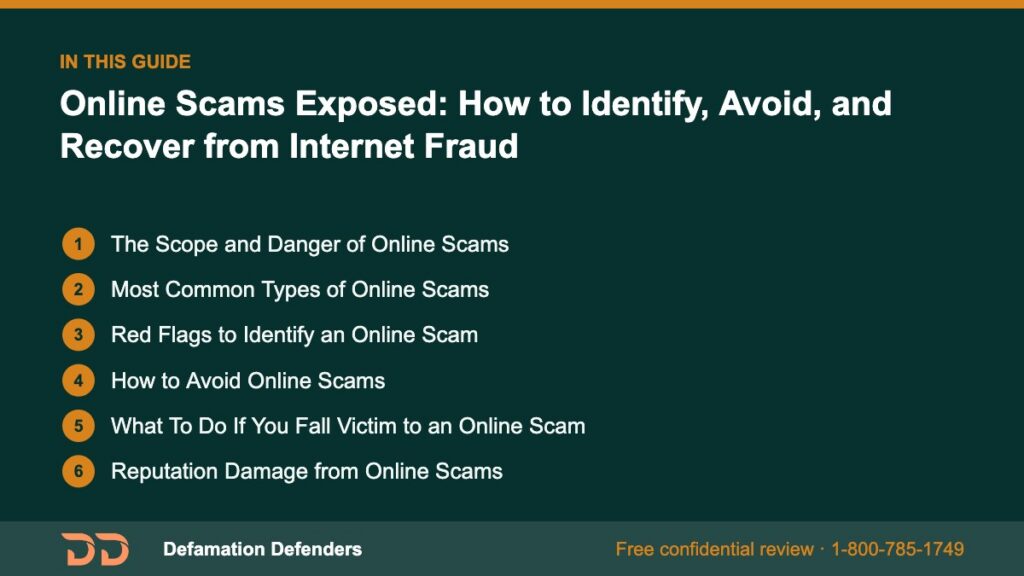
Table Of Content
The Scope and Danger of Online Scams
According to the Federal Trade Commission, American consumers reported losing over $10 billion to fraud in 2023 alone — a record-breaking number. From phishing schemes and fake e-commerce sites to romance frauds and cryptocurrency hoaxes, online scams continue to evolve in complexity and impact.
Why Scammers Succeed:
- High anonymity on the internet
- Social engineering techniques
- Data breaches and identity theft
- Lack of awareness among users
“Online scams thrive on human trust and distraction. The best defense is vigilance.”
Want this content gone? Get a free, confidential quote.
Send us the links. Most removals are done in a few days to a few weeks, with a full refund if we can't complete the agreed removal.
Most Common Types of Online Scams
Understanding scam types is key to spotting threats before they cause harm.
1. Phishing Emails and SMS
Fraudulent messages that appear to be from legitimate companies to trick users into giving away login credentials, bank details, or personal data.
Signs to watch for:
- Unusual sender addresses
- Grammar/spelling mistakes
- Urgent call to action (“verify now” or “your account will be suspended”)
2. Tech Support Scams
Scammers pose as tech support from companies like Microsoft or Apple, claiming your device is infected and charging fees to “fix” nonexistent issues.
3. Romance Scams
Scammers build fake relationships online, then request money for emergencies, travel, or personal crises.
4. Investment and Cryptocurrency Fraud
High-yield investment promises, fake crypto wallets, or unregulated exchanges often lead to major financial losses.
5. Online Shopping Scams
Fake websites or listings on marketplaces like Facebook or Craigslist offering products that never arrive.
6. Job and Work-from-Home Scams
Fake recruiters or job offers that ask for payment to process applications or send you fraudulent checks.
7. Impersonation Scams
Scammers pose as government agencies, law enforcement, or financial institutions to steal funds or sensitive information.
Red Flags to Identify an Online Scam
Use this quick checklist to sniff out fraudulent attempts:
- Requests for gift cards, crypto, or wire transfers
- Unsolicited messages from strangers with personal interest
- Requests for login credentials or verification codes
- URLs with misspellings or extra characters (e.g., paypa1.com)
- Overly polished or overly generic messages
- No verifiable physical address or contact info
How to Avoid Online Scams
Avoiding scams takes proactive security habits and common sense. Here are actionable methods to protect yourself:
1. Use Strong, Unique Passwords
Avoid reusing passwords. Use a password manager like Bitwarden or 1Password.
2. Enable Two-Factor Authentication
Turn on 2FA for all accounts, especially financial and email.
3. Verify Before You Click
Hover over links before clicking. Verify sender email addresses or domains. Don’t open attachments from unknown contacts.
4. Check Website Authenticity
Look for HTTPS, professional design, working contact info, and online reviews.
5. Limit Personal Info Shared Online
Scammers scrape social media for details like birthdays, travel plans, or pet names to guess passwords.
6. Keep Software Up to Date
Install updates to browsers, operating systems, and antivirus programs to patch vulnerabilities.
7. Use Scam Reporting Tools
Report phishing or scam emails to reportphishing@apwg.org or FTC Complaint Assistant.
What To Do If You Fall Victim to an Online Scam
If you’ve been scammed, time is of the essence. Follow these steps to minimize damage and start recovery:
Step 1: Cut Off Communication
Block the scammer on all platforms immediately.
Step 2: Document Everything
Take screenshots, save emails, messages, and transaction logs.
Step 3: Report the Fraud
- FTC: ReportFraud.ftc.gov
- IC3: Internet Crime Complaint Center
- Local Police: File a police report for documentation
- Platform-specific: Report on Facebook, Instagram, PayPal, etc.
Step 4: Contact Financial Institutions
Call your bank, credit card company, or payment processor to report the fraud and attempt a chargeback.
Step 5: Protect Your Identity
If personal data was stolen:
- Freeze your credit with Experian, Equifax, and TransUnion
- Use IdentityTheft.gov to create a recovery plan
Reputation Damage from Online Scams
Sometimes, scammers don’t just steal money—they impersonate you or post false information under your name, damaging your credibility.
If a scam led to:
- Fake online reviews
- Negative press articles
- Forum accusations or complaint site listings
You may suffer personal or business harm. That’s where Defamation Defenders can help.
Services Include:
- Removal of false and defamatory content from the internet
- Suppression of negative search results
- Monitoring and alerts for new damaging content
- Legal takedown notices and cease & desist letters
Don’t let an online scam define your reputation. Schedule a free consultation to take back control.

How Businesses Can Prevent and Respond to Scam Damage
Online scams also affect businesses—especially small companies targeted by fraudulent reviews or scammy impersonators.
Proactive Measures for Businesses:
- Secure domain and social media handles
- Monitor reviews on Google, Trustpilot, and industry platforms
- Train employees on phishing recognition
- Display security badges and trust seals on your website
If You’re Targeted:
- Flag and report false listings or reviews
- Use SEO to push down scam-related content
- Reach out to Defamation Defenders for a tailored reputation strategy
Online Scam Statistics That Matter
- Over 2.5 million fraud reports were filed with the FTC in 2023
- Identity theft topped the list of reported scams
- Email and text were the most common contact methods
- Cryptocurrency scams saw a 300% increase over 2 years
Stay updated on current scam trends.
Tools and Resources for Scam Protection
- Have I Been Pwned: Check if your data has been breached
- Google Safe Browsing: Verify if a website is safe
- Scamwatch (Australia): International alerts
- National Cyber Security Alliance: Cyber hygiene guides
FAQ: Online Scams
Sometimes. If you acted quickly and used a credit card or payment platform, chargebacks may be possible. Contact your bank or service provider.
Yes. It helps law enforcement gather intelligence and may prevent others from falling victim.
Yes, but jurisdiction and anonymity may complicate matters. A reputation firm or lawyer can advise based on your case.
Look for:
-HTTPS encryption
-Typos in the domain
-No contact page
-Too-good-to-be-true pricing
-Google Transparency Report
Yes. They can impersonate you, post false reviews, or spread lies on forums. Defamation Defenders specializes in reversing this type of damage.
Final Thoughts
Online scams aren’t just a minor inconvenience—they’re a serious and growing threat. With the right tools, awareness, and trusted allies like Defamation Defenders, you can protect yourself and your reputation.
Contact Defamation Defenders today to learn how we can remove scam-related content, safeguard your name, and restore trust online.
Related Contents:
Want this content gone? Get a free, confidential quote.
Send us the links. We'll reply with a firm quote and timeline. Most removals are done in a few days to a few weeks, with a full refund if we can't complete the agreed removal.
Pay-after-removal options · 4,000+ clients served · 4.9/5 on Google
Prefer to talk? Call 1-800-785-1749
