
Estimated reading time: 6 minutes
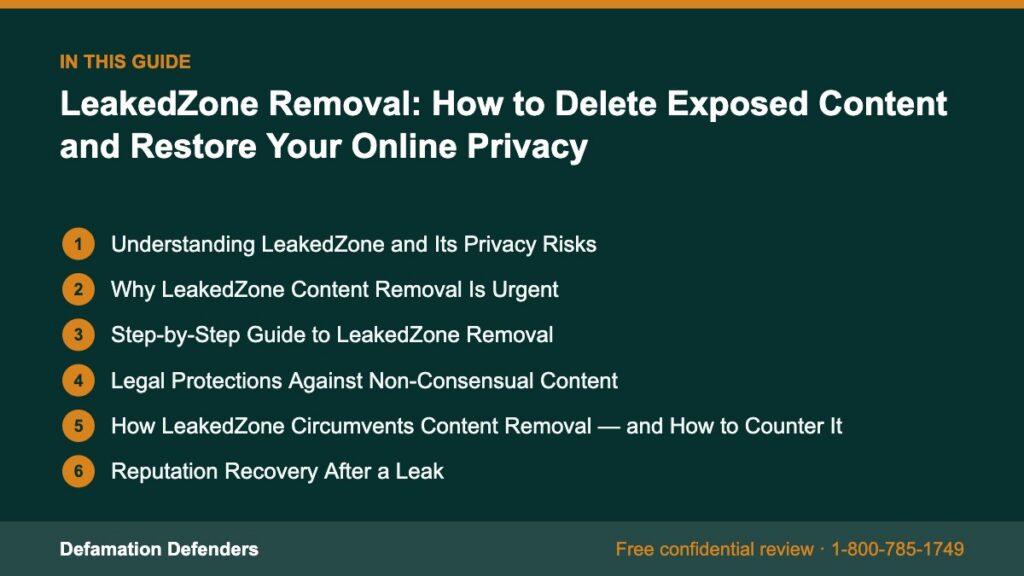
Table Of Content
Understanding LeakedZone and Its Privacy Risks
LeakedZone is a file-hosting and content-sharing platform that, in many instances, has been misused to distribute non-consensual or private material. Many users find their photos, videos, or personal data shared without permission, often leading to reputation damage, emotional distress, and identity theft risks.
Need help with this? Our leaked content removal service can handle it for you, starting with a free, confidential review and a firm quote before any work begins.
When private material ends up on sites like LeakedZone, removing it can be challenging. The site often operates across multiple domains or under mirror servers, making takedown requests difficult but not impossible.
“Once your privacy has been violated online, swift and strategic action is the key to reclaiming your reputation.”
Why LeakedZone Content Removal Is Urgent
Every hour your personal or explicit content remains online increases its visibility through:
- Search engine indexing.
- Forum re-uploads and reposts.
- Social media sharing or torrent links.
Failing to act quickly may lead to:
- Emotional and psychological harm — from anxiety to depression caused by public humiliation.
- Professional fallout — employers, clients, or peers finding leaked material.
- Permanent reputational damage — content that gets archived or mirrored indefinitely.
Fortunately, there are legal frameworks and content removal strategies that can restore your privacy and mitigate harm.
Step-by-Step Guide to LeakedZone Removal
Step 1: Gather Proof of Ownership
Before submitting a takedown request, compile:
- Screenshots of the posted material.
- URLs where the content appears.
- Proof that the content belongs to you (such as copyright metadata or original files).
This documentation is crucial if you file a DMCA takedown request or contact law enforcement.
Step 2: Submit a DMCA Takedown Request
The Digital Millennium Copyright Act (DMCA) protects individuals against unauthorized distribution of copyrighted material, including personal photos or videos.
Use this template when contacting LeakedZone or its hosting provider:
Subject: DMCA Takedown Request – Unauthorized Use of Personal Content

To Whom It May Concern,

I am the rightful owner of the content found at the following URLs: [Insert URLs]
This material was posted without my consent and violates my rights under the Digital Millennium Copyright Act (17 U.S.C. § 512).

I request that this content be removed immediately from your platform and any affiliated servers.

Signed,
[Your Full Name]
[Email Address]
[Date]
If LeakedZone does not respond, you can send your request to its web host or registrar, both of which can be identified via Whois Lookup.
Step 3: Report Violations to Search Engines
Even after removal from LeakedZone, the content may remain indexed on Google, Bing, or Yahoo. To ensure complete cleanup, use:
These tools help de-index sensitive URLs, ensuring they no longer appear in search results.
Step 4: Contact Defamation Defenders for Expert Removal Support
When DIY removal efforts fail, Defamation Defenders offers comprehensive content removal and privacy protection services.
Our team specializes in:
- Locating hidden or mirror versions of leaked material.
- Submitting legal takedowns across international servers.
- Restoring search results through strategic online reputation management.
- Preventing future leaks through proactive privacy monitoring.
👉 Request a Free Consultation to discuss your case confidentially.
Legal Protections Against Non-Consensual Content
Several state and federal laws protect victims of revenge porn and non-consensual image sharing, including:
- California Penal Code §647(j)(4): Criminalizes sharing intimate content without consent.
- Federal Stalkerware and Cyber Harassment Acts: Protects individuals from coordinated online abuse.
- Copyright Law (DMCA): Enables fast takedown actions for self-created material.
Victims may also file civil lawsuits for damages related to emotional distress, reputational harm, and invasion of privacy.
“The law increasingly recognizes the severe impact of online exploitation, empowering victims to take decisive legal action.”
For resources, visit:
How LeakedZone Circumvents Content Removal — and How to Counter It
Websites like LeakedZone often:
- Operate via multiple mirror domains.
- Host files on offshore servers.
- Employ anonymity networks to hide ownership.
To counter this:
- File a comprehensive DMCA package targeting all URLs.
- Contact the content delivery network (CDN), often Cloudflare or a similar provider.
- Notify search engines and social platforms to block the domain.
Persistent removals require forensic link tracking—a Defamation Defenders specialty—to uncover duplicate URLs across the web.
Reputation Recovery After a Leak
Once content has been removed, rebuilding your online image becomes essential. Steps include:
- Suppressing negative results: Publish accurate, positive, and authoritative content.
- Optimizing personal profiles: Ensure LinkedIn, professional sites, and bios appear above prior leaks.
- Establishing verified entities: Add
Personschema markup to confirm your identity with Google’s Knowledge Graph. - Monitoring reputation: Use tools like Google Alerts or Defamation Defenders’ proprietary monitoring system to track future mentions.
“Reputation recovery is not just about removal—it’s about replacing harmful narratives with verified truth.”

How Defamation Defenders Helps with LeakedZone Removal
Defamation Defenders provides ethical, legal, and effective privacy solutions to permanently erase damaging content and restore peace of mind.
Our services include:
- DMCA and privacy law enforcement
- Search engine de-indexing
- Mirror site discovery and takedown
- Reputation restoration through content creation and SEO suppression
Unlike automated systems, our approach blends human expertise with advanced technology, ensuring that even the most difficult-to-remove content is addressed thoroughly and discreetly.
👉 Start your removal process today with a confidential consultation at DefamationDefenders.com.
Preventing Future Leaks
To minimize the risk of future privacy breaches:
- Avoid storing sensitive photos or videos in cloud services without encryption.
- Revoke permissions from unknown apps and online platforms.
- Use two-factor authentication across all accounts.
- Regularly audit your online footprint by searching your name, phone number, or email address.
If you find your data listed on other people-search or adult content platforms, immediately initiate opt-out requests or contact professionals for removal.
Real Case Study: A Successful LeakedZone Takedown
A public figure discovered personal images circulating on LeakedZone, leading to reputational harm and anxiety. Within 10 days of contacting Defamation Defenders, all instances were located and legally removed, including from mirrored domains. Search visibility dropped to zero within 30 days.
This case demonstrates that even widespread leaks can be fully addressed with the right legal and technical strategy.
Frequently Asked Questions (FAQ)
Yes, through legal DMCA action, host contact, and expert ORM services, complete removal is achievable—even across mirrored sites.
Most cases resolve within 7 to 21 business days, depending on the domain host’s cooperation.
Absolutely. We specialize in removing sensitive or defamatory material from any source, including file-sharing, adult, or social media sites.
Yes. Requests can be submitted through legal representatives or privacy firms to protect your identity.
Once the primary URLs are deleted, search engine removal requests ensure residual cache versions are cleared.
Defamation Defenders offers ongoing reputation monitoring to detect and remove reuploads swiftly.
Why Acting Fast Matters
Every delay in addressing leaks amplifies exposure. The sooner action is taken, the easier it is to eliminate residual traces and restore trust. LeakedZone removal is not just a privacy task—it’s a form of personal recovery and reputation defense.
For comprehensive support, confidentiality, and permanent results, reach out to Defamation Defenders—your trusted ally in restoring online dignity and privacy.
👉 Schedule Your Private Consultation today.
Works Cited (MLA Format)
- Federal Trade Commission. Protecting Your Privacy Online. ftc.gov, 2024.
- Cyber Civil Rights Initiative. Non-Consensual Image Abuse Laws by State. cybercivilrights.org, 2024.
- Google. Request Removal of Personal Information or Explicit Content. support.google.com, 2025.
- United States Copyright Office. DMCA Safe Harbor Rules and Takedown Process. copyright.gov, 2024.
- Defamation Defenders. Content Removal and Reputation Repair Services. defamationdefenders.com, 2025.
