
Reputation is more than perception—it’s currency. In 2026, corporations navigating a volatile landscape of misinformation, cyber scrutiny, and consumer activism must treat online reputation management as a strategic imperative. Today, a single misstep, negative review, or viral misinformation campaign can trigger long-term damage to trust, valuation, and profitability. That’s why modern corporate reputation management strategies must evolve beyond press releases and boilerplate crisis control.
Need help with this? Our personal reputation repair service can handle it for you, starting with a free, confidential review and a firm quote before any work begins.
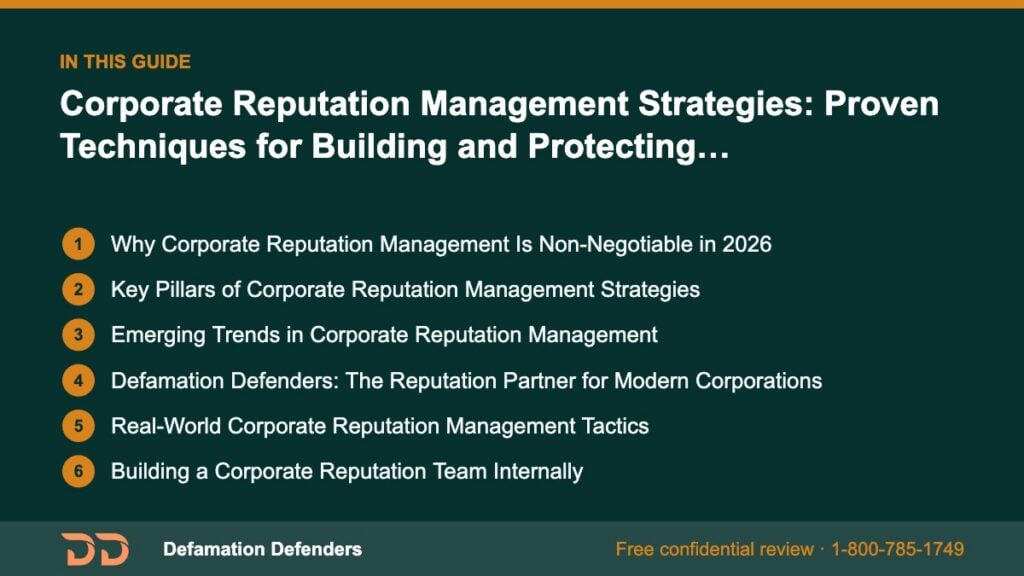
Table Of Content
Why Corporate Reputation Management Is Non-Negotiable in 2026
Stakeholders Watch Everything
Boards of directors, investors, and job seekers closely evaluate how a corporation is portrayed online. Google search results often form the first impression for clients, vendors, and even regulators.
A 2024 survey by Deloitte revealed that 88% of executives consider reputation risk as critical or important to their organization’s risk management strategy. What shows up on page one of a search engine matters more than ever before.
ESG, DEI, and Corporate Values Are Under the Microscope
Environmental, social, and governance (ESG) criteria are now standard elements of brand evaluation. Public misalignment with DEI initiatives or sustainability efforts can spark backlash. A reputation strategy must include alignment with evolving social expectations.
AI-Generated Misinformation Is a Real Threat
Artificial intelligence has made content creation faster but also weaponized. Deepfakes, fake news articles, and synthetic reviews are difficult to identify and even harder to counter without a layered reputation management approach.
Want this content gone? Get a free, confidential quote.
Send us the links. Most removals are done in a few days to a few weeks, with a full refund if we can't complete the agreed removal.
Key Pillars of Corporate Reputation Management Strategies
1. Proactive Online Monitoring
Use tools such as Google Alerts, Talkwalker, or Mention to track brand mentions, executive names, and product feedback in real-time. Consider leveraging AI-powered monitoring platforms for sentiment analysis.
2. Executive Reputation Management
In 2026, executives are the brand. C-level reputation matters as much as corporate branding. Negative press about a CEO or founder can ripple across investor confidence and customer perception. Establish dedicated executive online profiles, media training, and monitoring systems.
3. Strategic Content Development
Content creation should reflect corporate values, authority, and engagement. Ideal content types include:
- Thought leadership articles on LinkedIn
- Case studies
- Whitepapers and ESG reports
- Positive news features on third-party sites
- Multimedia content (videos, interviews, podcasts)
The goal is to dominate search results with favorable, high-authority content.
4. Legal Defamation Takedown Services
If false or defamatory content arises, legal solutions must be deployed quickly. Work with attorneys or firms like Defamation Defenders who specialize in removing harmful content, suppressing defamatory links, and filing DMCA takedowns.
5. Crisis Communication Framework
Prepare a playbook for reputation crises, including:
- Pre-approved statements
- Media contact hierarchy
- Legal review process
- Rapid social media response protocol
Timely, transparent communication minimizes fallout.
Emerging Trends in Corporate Reputation Management
Authenticity Over Spin
Audiences are savvy. They can spot virtue signaling and insincerity from a mile away. The winning strategy in 2026 is authentic transparency backed by consistent values in action.
Owned Media Platforms
Relying solely on third-party platforms is risky. Building your brand’s own blog, newsroom, or branded podcast can create resilience and message control.
Algorithmic Reputation Targeting
With search engines, AI chatbots, and voice assistants playing key roles in visibility, algorithmic reputation optimization is vital. This includes:
- Schema markup
- Structured data
- SEO-rich content
- Optimized executive bios
Stakeholder-Generated Content
Encourage content from employees, customers, and partners. Reviews, testimonials, social shoutouts, and guest posts lend credibility and enhance search engine trust.
“Reputation is what people say about you when you’re not in the room. In 2026, that ‘room’ is everywhere online.”
Defamation Defenders: The Reputation Partner for Modern Corporations
Defamation Defenders helps corporations navigate today’s complex reputation ecosystem. Whether you need:
- Negative content removal
- Executive profile optimization
- Review suppression
- Legal defamation services
- Strategic content publishing
Our specialists deploy tailored, effective solutions that safeguard your company’s future. Contact our team for a free corporate reputation audit.
Real-World Corporate Reputation Management Tactics
Strategy Playbook Example
Here’s a simplified tactical outline:
**Phase 1: Assessment & Discovery**
- Search engine results analysis
- Executive name searches
- Review sentiment scoring
- Competitor reputation mapping

**Phase 2: Suppression & Removal**
- Legal takedown requests
- De-indexing harmful URLs
- Disavow toxic backlinks

**Phase 3: Authority Building**
- Create and distribute leadership content
- Add executive schema to bios
- Secure third-party news coverage

**Phase 4: Monitoring & Maintenance**
- Weekly sentiment tracking
- Ongoing content syndication
- SEO performance audits
Building a Corporate Reputation Team Internally
Some companies opt to manage reputation internally. Build a capable team that includes:
- SEO specialist
- Public relations lead
- Legal advisor
- Social media manager
- Data analyst
Combine this with external partners who provide legal removal and suppression capabilities, such as Defamation Defenders.
Common Mistakes That Undermine Reputation Management
- Ignoring bad reviews: Silence implies guilt. Respond professionally and invite dialogue.
- Letting third-party content dominate: Your owned content should control your narrative.
- Reacting emotionally: Stay measured. Let legal and PR professionals handle hostile attacks.
- Neglecting employee behavior online: Internal policy should govern brand mentions.
- Failure to localize: Multinational companies must adapt strategies to each region’s laws and cultural norms.
Tools & Technologies That Power Reputation Strategies
- Ahrefs / SEMrush: Keyword and backlink analysis
- BuzzSumo: Content performance benchmarking
- Yext / Moz Local: Business listings management
- Crisis360: Incident and reputation crisis tracking
- Gravwell: Data-driven cyber monitoring
FAQ: Corporate Reputation Management Strategies
It refers to the strategic control of how a company is perceived across online and offline channels. It involves content creation, suppression of harmful material, and alignment with stakeholder values.
The rise of AI-generated misinformation, ESG scrutiny, and real-time social media reaction has made corporate reputation one of the top enterprise risks.
Partner with a reputation management firm that offers removal, suppression, and media strategy services. Defamation Defenders offers custom removal services.
Depending on severity, expect 3–6 months for moderate issues. Severe cases may require a year or more for full recovery and search engine visibility restoration.
Budgets range widely. Expect a monthly retainer between $2,000 to $10,000+ depending on the scope, urgency, and service level required.
Related Contents:
Want this content gone? Get a free, confidential quote.
Send us the links. We'll reply with a firm quote and timeline. Most removals are done in a few days to a few weeks, with a full refund if we can't complete the agreed removal.
Pay-after-removal options · 4,000+ clients served · 4.9/5 on Google
Prefer to talk? Call 1-800-785-1749
