
Estimated reading time: 5 minutes
Unlocking the Power of BBB Platforms in Modern Brand Management
Few organizations influence consumer trust like the Better Business Bureau. With more than a century of consumer advocacy, the BBB is known for rating businesses, mediating complaints, and publishing public profiles that influence purchasing behavior. In today’s interconnected economy, Better Business Bureau websites carry immense weight—especially when it comes to online reputation.
Need help with this? Our business reputation management service can handle it for you, starting with a free, confidential review and a firm quote before any work begins.
This long-form guide breaks down how BBB websites function, their impact on business credibility, and what you can do to manage your presence effectively.
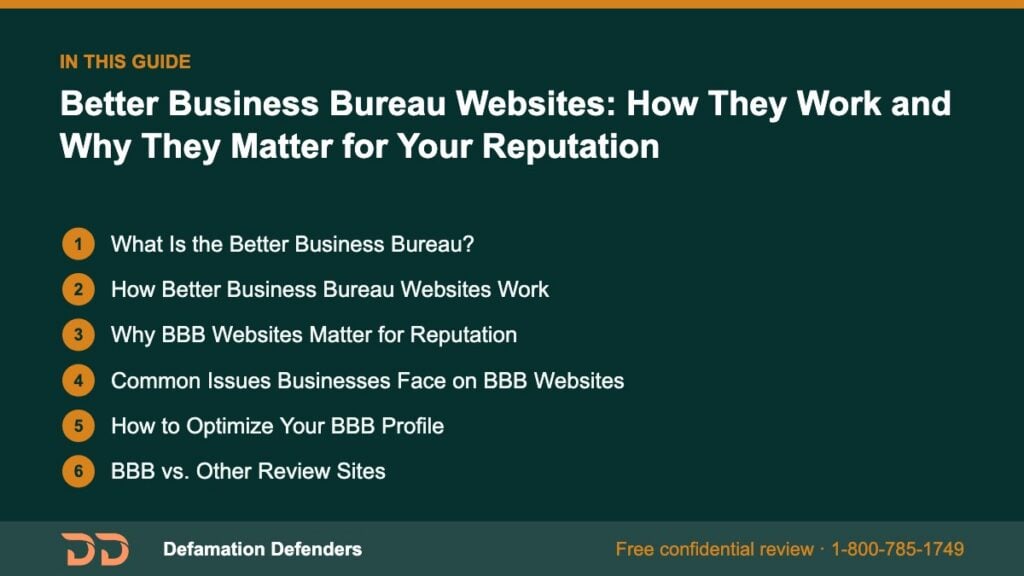
Table Of Content
What Is the Better Business Bureau?
The Better Business Bureau (BBB) is a nonprofit organization dedicated to advancing marketplace trust. Founded in 1912, the BBB operates through over 90 local chapters in North America. Its mission includes:
- Promoting ethical business practices
- Providing dispute resolution services
- Publishing business reviews and ratings
- Protecting consumers from scams and fraud
The BBB is not a government agency. However, its endorsement or criticism of a company can significantly affect consumer decisions, especially through its publicly accessible websites.
Want this content gone? Get a free, confidential quote.
Send us the links. Most removals are done in a few days to a few weeks, with a full refund if we can't complete the agreed removal.
How Better Business Bureau Websites Work
Business Profiles
Every company listed on a BBB site has a business profile that typically includes:
- Company name and contact info
- BBB rating (A+ to F)
- Complaint history
- Customer reviews (positive and negative)
- Accreditation status
- Business start date and ownership info
These profiles are indexed by search engines and often appear on the first page of branded search results.
The BBB Rating System
The BBB rating is based on a 100-point scoring system that considers:
- Complaint volume and resolution history
- Time in business
- Type of business and licensing
- Transparency and public disclosures
- Advertising issues
Businesses that score between 97 and 100 receive an A+ rating. Those with unresolved complaints or questionable advertising tactics may see lower scores.
Accreditation vs. Non-Accreditation
BBB Accreditation is a voluntary program where businesses pay a fee and agree to uphold the BBB’s Standards for Trust. Accredited businesses:
- Display the BBB seal on websites and marketing materials
- Must respond to complaints within a set timeframe
- Are subject to ongoing monitoring and annual reviews
Non-accredited businesses may still have BBB profiles but do not receive the same promotional benefits or rating support.
Why BBB Websites Matter for Reputation
High Search Visibility
BBB profiles often appear among the top results in Google searches for business names. This visibility means any negative reviews, unresolved complaints, or low ratings are highly visible to potential clients.
Consumer Trust Factor
According to a BrightLocal consumer survey, over 82% of consumers consult third-party review sites before making a purchase. BBB’s nonprofit status and history give it added credibility.
Complaint Resolution Platform
Consumers use BBB websites to file complaints against businesses. Whether valid or not, unresolved complaints appear publicly and influence your score. Quick, professional responses can help mitigate damage and even improve your rating.
Media and Public Scrutiny
News outlets and regulators occasionally reference BBB ratings when investigating or reporting on businesses. A poor rating may attract unwanted attention, while a strong rating can reinforce public confidence.
Common Issues Businesses Face on BBB Websites
1. Fake or Misleading Complaints
Not all BBB complaints are legitimate. Competitors or disgruntled former employees can weaponize the complaint system. While the BBB attempts to screen abusive claims, flawed reviews still slip through.
2. Unclaimed Profiles
If a business hasn’t claimed its BBB profile, it may:
- Contain outdated or inaccurate information
- Go unmonitored for complaints
- Miss opportunities to correct false narratives
3. Negative SEO Effects
BBB pages with unresolved issues can rank higher than a business’s own website. This phenomenon, known as review hijacking, diverts traffic and damages trust.
4. Difficulty Removing Defamatory Reviews
The BBB typically won’t remove consumer-submitted reviews unless they contain profanity or violate content guidelines. Businesses often find themselves stuck with misleading or exaggerated posts.

How to Optimize Your BBB Profile
Step 1: Claim Your Profile
Search your company on BBB.org and claim ownership of the listing. This allows you to:
- Update business information
- Add photos and contact links
- Respond to reviews and complaints
- Track your rating progress
Step 2: Monitor and Respond to Complaints Promptly
Use these tips:
- Stay calm and professional
- Acknowledge the issue
- Offer resolution, even if partial
- Avoid legal threats or dismissive language
Step 3: Encourage Positive Reviews
Ask satisfied clients to leave feedback on your BBB profile. Use:
- Post-transaction emails
- Printed prompts with invoices
- In-person verbal requests
Step 4: Ensure Transparency
BBB favors companies that disclose:
- Return policies
- Terms of service
- Warranty information
- Legal disclaimers
Adding transparency elements can help boost your BBB rating over time.
Step 5: Consider Accreditation
If you meet the criteria and value the BBB’s trust signals, accreditation may be worthwhile. However, it requires annual fees and a commitment to dispute resolution.
BBB vs. Other Review Sites
| Platform | Rating Control | Visibility | Verification Level | Dispute Tools |
|---|---|---|---|---|
| BBB | Moderate | High | Verified manually | Formal system |
| Yelp | Low | High | Minimal | Limited |
| Google Reviews | Low | Very High | None | None |
| Trustpilot | Medium | High | Verified reviewers | Premium tools |
The Better Business Bureau offers a more formal, structured review and complaint process compared to many open review platforms.
How Defamation Defenders Can Help
At Defamation Defenders, we specialize in resolving reputation issues stemming from Better Business Bureau websites. Our services include:
- Strategic response drafting
- Monitoring complaint profiles
- Suppressing false or defamatory reviews
- Assisting with accreditation preparation
- SEO repair to elevate positive content
When reputations are at stake, we protect what matters most.
📞 Schedule a private consultation with our team today.
Frequently Asked Questions
No. The BBB is a nonprofit organization with no legal authority, but it holds strong consumer influence.
Only if it violates content guidelines. Otherwise, the best approach is to respond publicly and factually.
Indirectly. Accreditation adds trust signals that may enhance user engagement and reduce bounce rates.
Fees vary by location and business size. Contact your local BBB chapter for specific rates.
Unanswered complaints hurt your rating and remain visible on your profile.
We can’t delete reviews, but we can assist in drafting effective responses and developing content to reduce visibility.
Related Contents:
Want this content gone? Get a free, confidential quote.
Send us the links. We'll reply with a firm quote and timeline. Most removals are done in a few days to a few weeks, with a full refund if we can't complete the agreed removal.
Pay-after-removal options · 4,000+ clients served · 4.9/5 on Google
Prefer to talk? Call 1-800-785-1749
