

Estimated reading time: 6 minutes
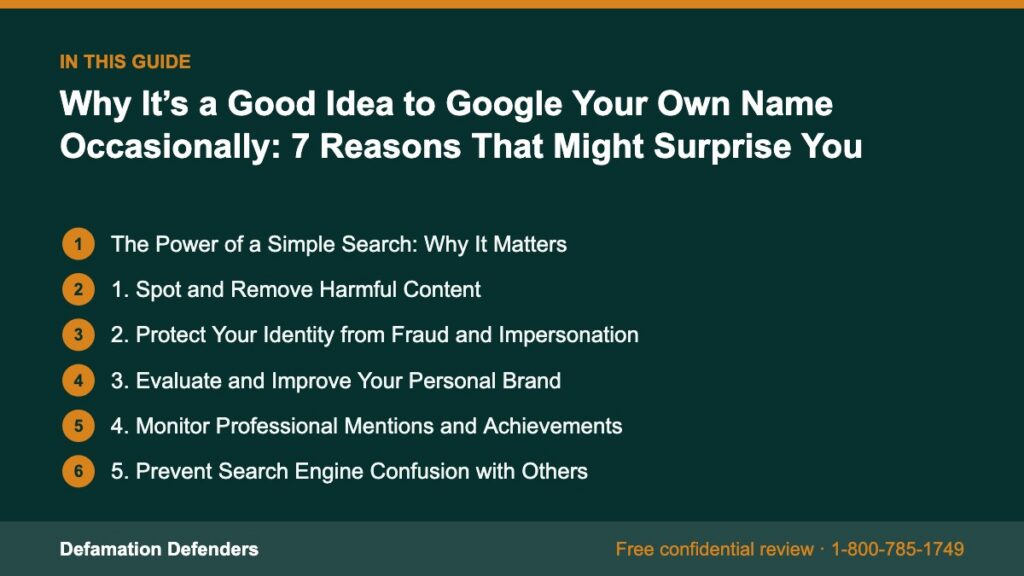
Table Of Content
The Power of a Simple Search: Why It Matters
It may seem harmless or even self-indulgent, but running a periodic search on your name can be an incredibly revealing exercise. Whether you’re a job seeker, entrepreneur, student, or someone navigating modern life, your name leaves a trail. This online footprint can impact your professional opportunities, personal relationships, and reputation in subtle yet significant ways.
Need help with this? Our search result suppression service can handle it for you, starting with a free, confidential review and a firm quote before any work begins.
Below, you’ll uncover 7 compelling reasons why it’s a good idea to Google your own name occasionally, plus practical tips, expert insights, and solutions from Defamation Defenders for what to do if your search turns up something negative.
1. Spot and Remove Harmful Content
One of the most pressing reasons to monitor your online name presence is to identify harmful, defamatory, or outdated content.
What You Might Discover:
- Old blog posts or forum comments you forgot about
- Public records or mugshots showing up in search results
- Anonymous slander or fake reviews on scam sites
- Tagged images or videos from social media that portray you inaccurately
Finding these early means you can take proactive steps to mitigate the damage, whether that means submitting removal requests, pursuing legal remedies, or working with professionals to suppress harmful content.
“What shows up on Google can either open doors or slam them shut.”
Quick Tip:
Use incognito mode or a private browser window when searching so the results are unbiased by your personal search history.
2. Protect Your Identity from Fraud and Impersonation
Cybercriminals often gather personal details from open sources to impersonate individuals, commit fraud, or launch phishing attacks.
When you Google your name occasionally, you can:
- Check if someone is using your name, photo, or contact info fraudulently
- Discover if your email has been exposed in data breaches (Check with HaveIBeenPwned)
- Find cloned or fake social media profiles
Monitoring your name empowers you to take swift action to report impersonation or identity theft before it escalates.
3. Evaluate and Improve Your Personal Brand
Whether you’re applying for a job, pitching investors, or dating, people Google you. What they find often serves as your first impression.
Here’s What You Can Learn:
- What your top-ranking search results say about you
- How well your profiles (LinkedIn, Medium, publications) rank
- If your name is confused with someone else
Enhance Your Online Narrative:
- Publish thought leadership on reputable platforms
- Create or update your LinkedIn profile and personal website
- Optimize your online presence with consistent use of your full name
A strategic online presence helps control your narrative and can protect you from being misrepresented.
4. Monitor Professional Mentions and Achievements
Sometimes, your work is featured in ways you weren’t even aware of.
For example:
- You might be quoted in an article, mentioned in a press release, or listed as a contributor
- Local news coverage might highlight an achievement
- Your conference appearance could be recapped on a blog
Use Tools Like:
- Google Alerts for real-time notifications
- Mention.com or Talkwalker Alerts
Tracking these moments allows you to:
- Share your accomplishments
- Correct inaccuracies in coverage
- Build a portfolio of social proof
5. Prevent Search Engine Confusion with Others
Your name isn’t always unique. If someone with the same name gets into legal trouble or is featured negatively online, their story could be mistaken for yours.
Real Consequences:
- Potential employers mistaking you for a criminal
- Colleagues questioning your reputation
- Search results mixing your identity with another
Regular searches help ensure your reputation isn’t damaged by mistaken identity. If needed, reputation management services like those offered by Defamation Defenders can help push accurate, positive content to the top.
6. Keep Social Media and Public Records in Check
Social media posts, real estate records, voter registration details, and even court filings are often indexed by search engines. Googling yourself helps you:
- Identify outdated or private information that should be removed
- Find unflattering social media content posted by others
- See how your name is tied to public records or databases
Use this intel to edit, delete, or request removal of content that doesn’t reflect your current image.
Common Sources of Indexed Info:
- Whitepages-style websites
- Social media aggregators
- Court record databases
“Just because it’s public doesn’t mean it should be permanent.”

7. Maintain Control in an Era of Transparency
In today’s information-first environment, the public expects transparency. Employers, journalists, landlords, even first dates may Google you. Knowing what they’ll find puts you in control.
The Risks of Ignoring Your Online Image:
- Missed job or business opportunities
- Unchallenged misinformation spreading
- Personal distress from surprise negative content
Being proactive means you can resolve issues quickly, craft a compelling narrative, and build trust before you ever speak a word.
How to Google Yourself the Right Way
Here are a few best practices to get the most out of your name search:
Basic Search Techniques:
- Use quotes:
"First Last" - Add relevant keywords: city, company, profession
- Check images, videos, news, and social tabs
- Don’t forget old usernames or aliases you used in forums
Go a Step Further:
- Review the first 5 pages of results
- Set up Google Alerts for ongoing monitoring
- Try searches on alternative engines like Bing, DuckDuckGo, and Yandex
What to Do If You Find Something Negative
Negative content can be emotionally distressing and professionally harmful. Here’s what you can do:
1. Determine Legality and Accuracy
- Is the information false or defamatory?
- Is it an opinion or a factual inaccuracy?
2. Contact the Website Owner
- Look for a “Contact” or “About” page
- Politely request the removal or edit of the content
3. Use Legal or Professional Help
- File a defamation claim if appropriate
- Request removal from search engines (like via Google’s removal tools)
4. Partner With a Reputation Expert
Defamation Defenders offers:
- Content removal services
- Suppression strategies
- Personal brand rebuilding
FAQ: Googling Your Own Name
At least once a month. Use Google Alerts for continuous monitoring.
Absolutely. Celebrities, executives, and job seekers do it regularly.
Yes. It helps you identify leaks of personal info and take corrective action.
Add more identifiers (e.g., “John Smith CPA Chicago”) and filter results.
Yes, but it depends. Defamation Defenders can help with content removal or online suppression.
Yes, over 70% of recruiters do. Your search result can impact your chances significantly (CareerBuilder Study).
Defamation Defenders: Your Ally in Online Reputation
For individuals facing challenges like defamation, impersonation, or unwanted visibility, Defamation Defenders offers:
- Comprehensive reputation audits
- Custom online monitoring plans
- Strategic content suppression and removal
- Ongoing personal brand consultation
Schedule a Free Consultation Today →
Protect your name. Protect your future.
Related Contents:
