
Estimated reading time: 5 minutes
In the information age, where content is constantly shared, commented on, and re-shared, defamatory statements can travel faster and wider than ever before. From viral posts to biased news stories, internet defamation has become a growing threat to both individuals and organizations. Knowing how to define, identify, and respond to defamatory content can be the difference between long-term damage and a successful recovery.
Need help with this? Our internet defamation removal service can handle it for you, starting with a free, confidential review and a firm quote before any work begins.
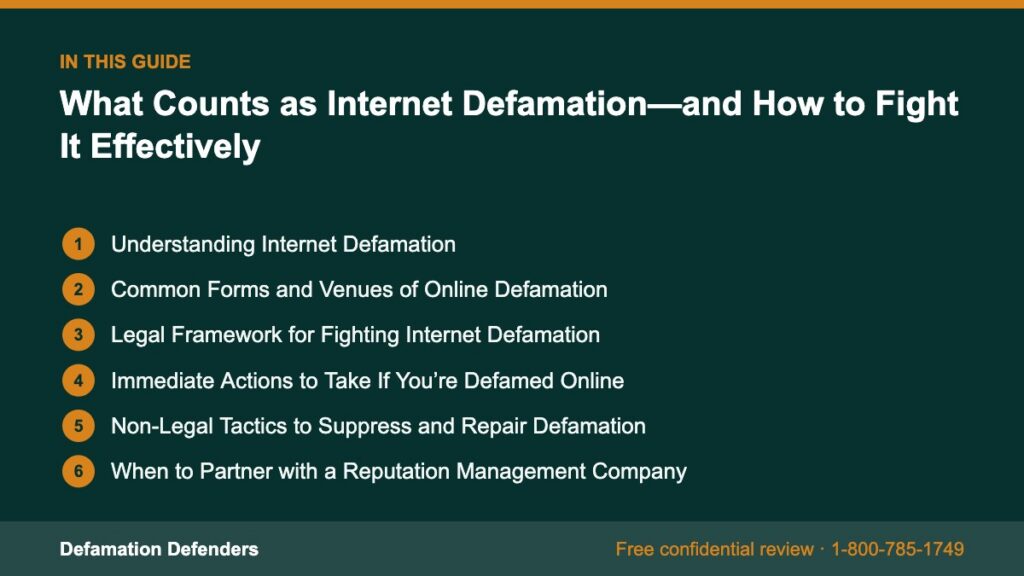
Table Of Content
Understanding Internet Defamation
Defining Defamation
Defamation involves making a false statement that injures someone’s reputation. Online, this can take the form of blog posts, tweets, videos, or even comments. Defamation is generally categorized into:
- Libel – Written or published defamatory content.
- Slander – Spoken defamatory statements, now often appearing in video, podcast, or live-stream formats.
Legal Elements of Defamation
To successfully prove defamation, most jurisdictions require that the plaintiff demonstrate:
- A false and defamatory statement about them.
- Publication or communication to a third party.
- Fault amounting to at least negligence.
- Harm caused to the reputation or livelihood of the individual.
Certain exceptions exist, such as opinions (which are not defamatory), privileged speech, or statements made under specific legal protection.
Who Can Be Defamed?
While public figures are often the targets of defamation suits, private individuals, small businesses, professionals, and influencers are increasingly affected. In fact, many online defamation cases involve:
- Professionals like doctors or lawyers attacked via review platforms.
- Small businesses targeted by disgruntled ex-employees.
- Private citizens caught in viral controversies or cancel culture.
Common Forms and Venues of Online Defamation
Social Media
Facebook, Twitter, TikTok, and Instagram have all become breeding grounds for character attacks. A single false statement on social media can damage someone’s reputation globally.
Anonymous Forums and Review Sites
Platforms such as Reddit, Ripoff Report, and Yelp allow anonymous submissions. This enables disgruntled users or competitors to publish defamatory claims with little accountability.
News Articles and Blogs
Online journalism, including user-generated blogs, may cross the line from commentary into libel if facts are twisted or fabricated. Once indexed by search engines, the damage can persist indefinitely.
Fake Profiles and Impersonation
Creating a fake identity online to defame someone is not only malicious—it can also be grounds for civil litigation and in some cases, criminal charges.
Legal Framework for Fighting Internet Defamation
United States
In the U.S., the First Amendment protects free speech, but it does not protect defamatory speech. Laws vary by state, and public figures must meet the higher burden of proving “actual malice.”
Europe and GDPR
Under the General Data Protection Regulation (GDPR), individuals in the EU may request the removal of personal data—including defamatory content—if it is inaccurate, irrelevant, or excessive.
Other Jurisdictions
Countries such as Canada, the UK, and Australia have varying legal frameworks that offer different levels of protection and enforcement mechanisms for defamation claims.
Immediate Actions to Take If You’re Defamed Online
1. Don’t Retaliate Publicly
Responding emotionally or attacking back may worsen your case. Remain calm and document everything.
2. Collect Evidence
Use screenshots, timestamps, and archive tools to collect and preserve:
- URLs
- Social media posts
- Forum threads
- Email communications
3. Report the Content
Report defamatory content directly to platform moderators or content hosts. Use specific reporting tools and attach your evidence for faster resolution.
4. Seek Legal Advice
An experienced defamation attorney can:
- Send cease-and-desist letters
- Initiate a libel lawsuit
- File emergency injunctions

Non-Legal Tactics to Suppress and Repair Defamation
Search Engine Suppression
Search engine optimization (SEO) strategies can help push defamatory results off the first page of search engines:
- Publish high-quality content with your name or brand
- Guest post on reputable sites
- Create press releases or media coverage
- Optimize your social media profiles and blogs
Reputation Monitoring Tools
Use monitoring platforms like:
- Google Alerts
- BrandYourself
- Mention.com
- Hootsuite Streams
These tools help detect when new content mentioning your name or brand goes live.
Content Removal Requests
Use legal and platform-specific removal channels:
- Google’s Defamation Removal Tool
- DMCA takedown requests for copyrighted materials
- Right to be Forgotten (EU residents)
When to Partner with a Reputation Management Company
Benefits of Hiring Experts:
- Access to legal counsel and PR specialists
- Advanced SEO and suppression tools
- Confidential, white-label solutions
Services Offered by Defamation Defenders
- Content de-indexing
- Reputation audits
- Court-order enforcement
- Suppression strategies
- Profile creation and management
Start with a free online reputation consultation to assess your exposure and build a plan.
Preventative Measures Against Defamation
Own Your Name and Brand
- Register domain names with your name or company.
- Secure matching social handles across platforms.
Create and Publish Authoritative Content
- Blogs, case studies, interviews, and videos establish credibility.
- Use schema markup and optimize for branded keywords.
Build Relationships with Journalists and Influencers
- Contribute to media outlets like Forbes, Inc, or Medium.
- Encourage positive media narratives to counteract negativity.
Establish Clear Employee and Brand Guidelines
- Social media policies
- Brand voice and response templates
Frequently Asked Questions
Yes, by filing a defamation notice through Google’s removal tool. However, success often requires legal documentation.
Free speech protects opinions, not false claims that harm another’s reputation.
Yes. Courts can subpoena platforms and ISPs to reveal anonymous users through IP tracking.
Between 3–12 months, depending on the volume and visibility of defamatory content.
When appropriate, yes. A sincere public statement can mitigate reputational damage.
Yes. These platforms allow reporting for content violating their terms. Legal orders are even more effective.
Absolutely. Many employers screen candidates via Google searches, and negative press or defamatory reviews can reduce your chances of being hired.
It varies by jurisdiction, usually between one and three years from the date the statement was made or discovered.
Pricing varies by complexity and scope. Minor suppression campaigns start at a few hundred dollars per month, while full-scale recovery strategies can cost more.
Generally, no. Section 230 of the Communications Decency Act in the U.S. protects platforms from liability for user content. However, you can sue the author directly.
Related Contents:
