
Estimated reading time: 5 minutes
A company’s reputation can take years to build and just minutes to destroy. In an era of constant public scrutiny, businesses are discovering that social responsibility isn’t just an ethical choice—it’s one of the most effective forms of reputation management.
Need help with this? Our social media removal service can handle it for you, starting with a free, confidential review and a firm quote before any work begins.
When companies act in ways that benefit society, from environmental initiatives to community engagement, they create a reservoir of goodwill that can protect them during crises and elevate their brand in competitive markets. This guide will explore how social responsibility as a reputation management strategy works, why it’s so effective, and how to integrate it into your organization.
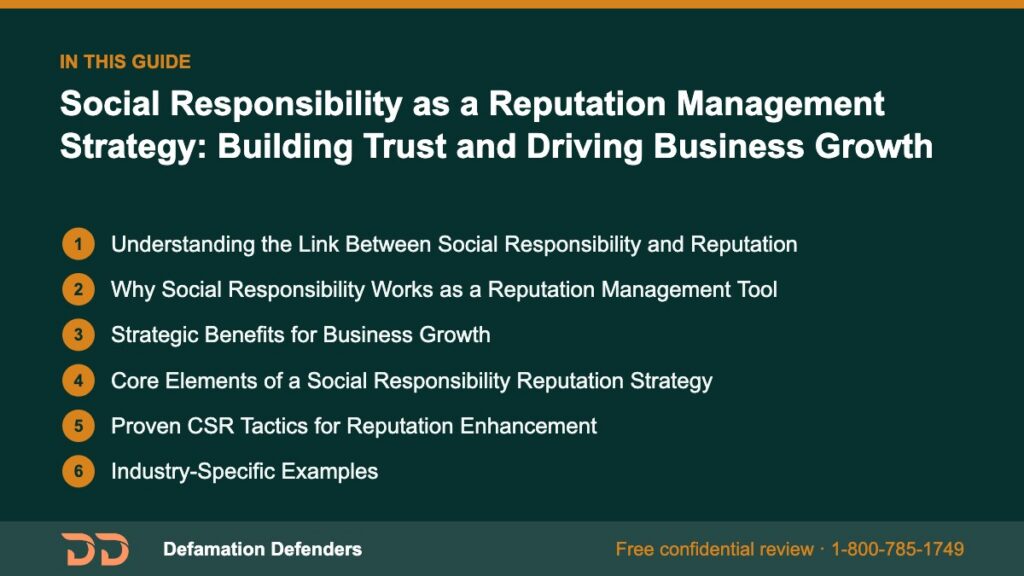
Table Of Content
Understanding the Link Between Social Responsibility and Reputation
Social responsibility refers to the voluntary actions a business takes to improve the community, environment, or broader society. Reputation management involves shaping public perception to reflect the most positive aspects of your organization. The intersection of these two creates a strategy that fosters trust, loyalty, and long-term credibility.
A Harvard Business Review analysis found that companies recognized for social responsibility initiatives often experience increased consumer trust and higher employee engagement—both critical elements of a strong reputation.
Want this content gone? Get a free, confidential quote.
Send us the links. Most removals are done in a few days to a few weeks, with a full refund if we can't complete the agreed removal.
Why Social Responsibility Works as a Reputation Management Tool
Builds Emotional Connections
People don’t just buy products—they buy into values. Social responsibility connects your brand to causes your customers care about.
Creates Positive Media Coverage
CSR initiatives are often highlighted by news outlets, blogs, and influencers, giving your brand organic exposure.
Strengthens Crisis Resilience
When your company is known for doing good, negative events are more likely to be seen as exceptions rather than patterns.
Attracts Like-Minded Talent
Employees increasingly want to work for organizations whose values align with their own.
Strategic Benefits for Business Growth
- Brand Differentiation
In crowded markets, CSR can be the deciding factor for consumers choosing between similar products or services. - Enhanced Stakeholder Relationships
Investors, partners, and regulators often favor companies with robust CSR programs. - Customer Loyalty
A reputation for social responsibility fosters repeat business and word-of-mouth referrals. - Risk Mitigation
Ethical operations reduce the likelihood of scandals or compliance violations.
Core Elements of a Social Responsibility Reputation Strategy
Identify Relevant Causes
Align with causes that resonate with both your audience and your industry. Authenticity is key—misaligned causes risk skepticism.
Commit to Long-Term Efforts
One-off donations may be appreciated, but sustained initiatives show genuine commitment.
Ensure Transparency
Report your progress honestly, even if you fall short of your goals.
Engage Stakeholders
Involve employees, customers, and community members in planning and executing CSR initiatives.
Proven CSR Tactics for Reputation Enhancement
Environmental Stewardship
- Adopt renewable energy sources
- Implement waste reduction programs
- Support conservation projects
Community Development
- Fund educational programs
- Partner with local nonprofits
- Sponsor community events
Ethical Business Practices
- Ensure fair wages
- Maintain safe working conditions
- Establish anti-corruption policies
Inclusive Culture
- Promote diversity in hiring
- Support employee resource groups
- Partner with minority-owned suppliers
Industry-Specific Examples
Technology: E-waste recycling programs and free tech training for underserved communities.
Healthcare: Mobile clinics offering free screenings in low-income areas.
Finance: Financial literacy workshops for high school students.
Hospitality: Sourcing ingredients from local farms and reducing food waste.
How to Integrate Social Responsibility Into Reputation Management
- Audit Current Initiatives
Identify what your company is already doing that aligns with CSR principles. - Develop a Strategic Plan
Define goals, timelines, and resources for your social responsibility program. - Communicate Effectively
Use press releases, blog posts, and social media to share your efforts without overhyping them. - Measure Impact
Track metrics like volunteer hours, funds donated, and environmental improvements. - Adapt and Evolve
Review your strategy regularly to ensure it stays relevant and impactful.
Case Studies
Patagonia – Known for its environmental activism, the company has built a loyal customer base that sees it as more than just a clothing brand.
Starbucks – Its College Achievement Plan for employees not only improves lives but also boosts retention and public perception.
Local Example – A regional construction firm offers apprenticeships to underprivileged youth, gaining media attention and industry awards.

Measuring the Impact on Reputation
Metrics to consider:
- Brand sentiment analysis
- Customer retention rates
- Employee engagement surveys
- Media coverage volume and tone
The Triple Bottom Line framework—People, Planet, Profit—remains a gold standard for measuring CSR’s holistic impact.
Challenges and How to Overcome Them
Challenge: Risk of being perceived as inauthentic
Solution: Align efforts with core business values and be transparent about motivations.
Challenge: Limited budget
Solution: Focus on local initiatives with high visibility and community involvement.
Challenge: Measuring intangible benefits
Solution: Use both quantitative data (e.g., sales growth) and qualitative data (e.g., testimonials).
The Role of Defamation Defenders
Even the best CSR strategies can be undermined by false information or malicious content. Defamation Defenders helps safeguard your brand’s hard-earned reputation by:
- Removing defamatory content
- Suppressing harmful search results
- Ensuring positive CSR stories are visible
By pairing social responsibility with professional reputation management, you can maximize trust and protect your business growth trajectory.
Implementation Checklist
plaintextCopyEdit[ ] Audit current CSR activities
[ ] Identify causes aligned with brand values
[ ] Create long-term CSR goals
[ ] Assign a CSR task force
[ ] Partner with credible organizations
[ ] Develop communication channels
[ ] Measure and report results
[ ] Adjust strategy annually
Frequently Asked Questions
It builds trust, fosters loyalty, and creates positive public perception that protects against negative events.
Focus on local initiatives like volunteering, sponsoring community events, or supporting local causes.
Yes—visibility ensures your good work influences public perception.
It can backfire, leading to accusations of “greenwashing” and damaging trust.
Employees are more likely to stay with companies that share their values.
Many investors prioritize ESG factors, making strong CSR a competitive advantage.
Yes—a history of positive contributions can soften negative coverage.
At least once a year, with adjustments based on results and feedback.
By amplifying positive stories and protecting against reputational threats.
Yes—authentic CSR can be a central part of your brand storytelling.
Call to Action – Build Trust, Protect Your Reputation
Social responsibility is one of the most effective ways to strengthen your reputation and foster long-term growth. But for maximum impact, your good work must be visible and protected.
📞 Contact Defamation Defenders to ensure your CSR efforts are amplified and your brand’s reputation remains untouchable.
Related Contents:
Want this content gone? Get a free, confidential quote.
Send us the links. We'll reply with a firm quote and timeline. Most removals are done in a few days to a few weeks, with a full refund if we can't complete the agreed removal.
Pay-after-removal options · 4,000+ clients served · 4.9/5 on Google
Prefer to talk? Call 1-800-785-1749
