
Estimated reading time: 7 minutes
Your reputation is one of your most valuable assets. Whether you are an individual, business owner, public figure, or professional, your online image influences how others perceive your credibility, trustworthiness, and expertise. But the internet can quickly magnify misinformation, negative content, or malicious attacks, leaving long-lasting damage if you do not act quickly and strategically.
Need help with this? Our personal reputation repair service can handle it for you, starting with a free, confidential review and a firm quote before any work begins.
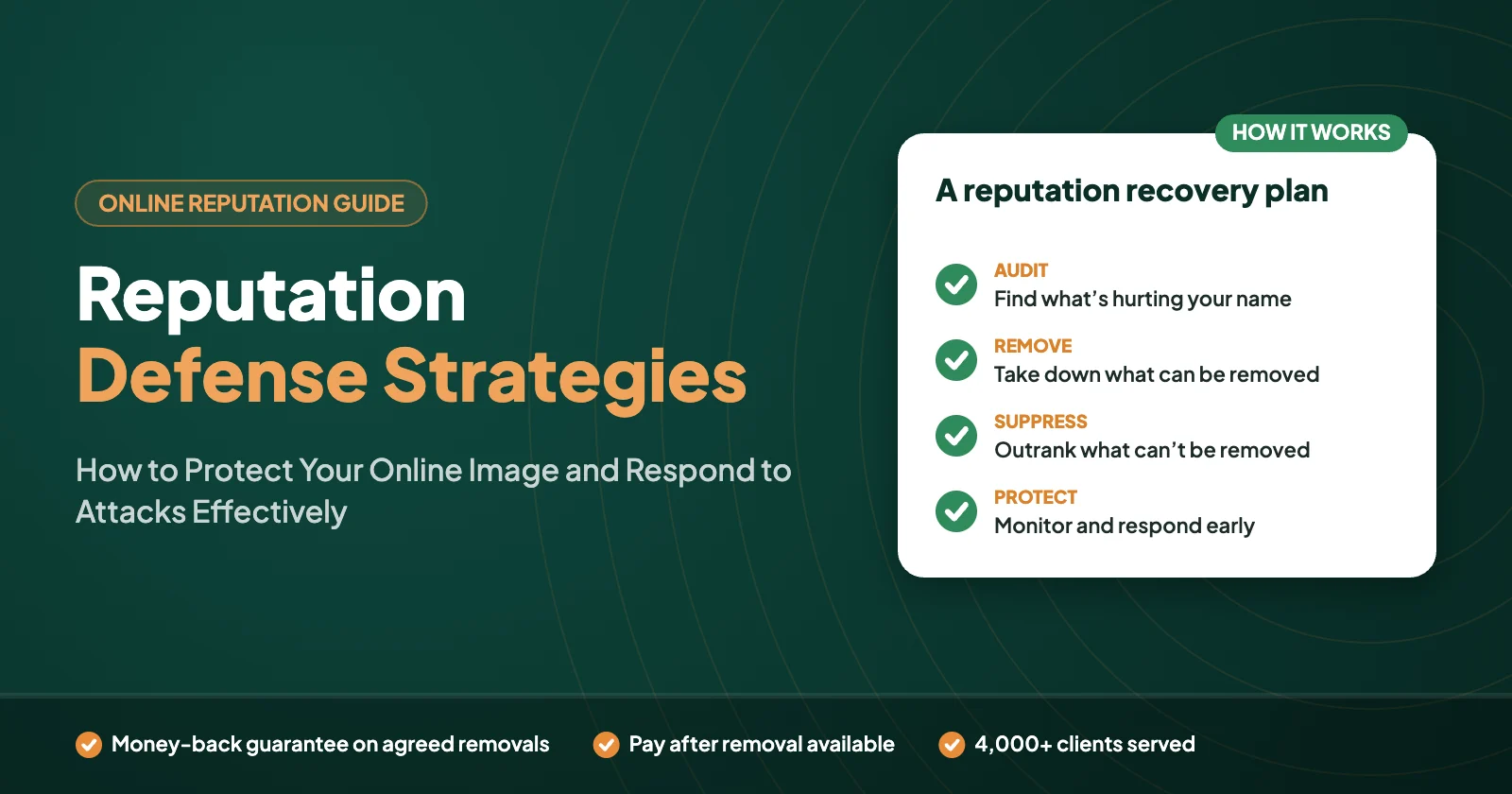
Reputation defense is not simply about reacting to negative situations—it is about building a proactive, structured, and comprehensive system that protects your name, shields your credibility, and restores control over your personal narrative. This guide provides in-depth strategies for reputation protection, reputation repair, content removal, crisis response, and long-term online image strengthening.
Understanding Reputation Defense
Reputation defense encompasses all efforts to:
- Protect your online identity
- Correct misleading narratives
- Remove harmful or defamatory content
- Strengthen positive and authoritative information
- Manage crises before they escalate
- Safeguard your personal and professional future
Online reputation threats come in many forms:
- False accusations
- Negative reviews
- Unflattering search engine results
- Doxxing or exposure of private information
- Mugshots, arrest records, or outdated legal content
- Misleading news articles
- Social media smear campaigns
The faster you act, the more effective your defense becomes. Delayed responses allow harmful content to spread, be cached, shared, or indexed by search engines.
Types of Online Attacks That Require Reputation Defense
Table Of Content
Defamation and False Allegations
False statements that harm your character or career are among the most damaging online threats. Defamation often appears through:
- Blog posts
- Social media claims
- Online forums
- Comments sections
- Videos or livestream commentary
These incidents require both swift and strategic countermeasures.
Want this content gone? Get a free, confidential quote.
Send us the links. Most removals are done in a few days to a few weeks, with a full refund if we can't complete the agreed removal.
Public Misinformation
Incorrect or exaggerated information spreads rapidly online. This can include:
- Wrong details about past events
- Misidentification
- Context removal
- Biased reporting
Addressing misinformation requires careful correction and transparency.
Negative Reviews and Consumer Complaints
Businesses often suffer from:
- Fake reviews
- Competitor sabotage
- Angry customer exaggerations
- Coordinated review attacks
Reputation defense must distinguish genuine feedback from malicious intent.
Mugshots and Legal Records
Even dismissed cases can remain online years after resolution. These sources can be located on:
- Mugshot sites
- Arrest logs
- Public record portals
- Search engine archives
Professional intervention is often needed to remove or suppress such content.
Smear Campaigns and Harassment
Malicious attacks can be coordinated or sustained, including:
- Targeted bullying
- Character assassination
- False narratives crafted on social media
- Anonymous trolling
- Revenge-motivated publishing
These situations often escalate if ignored.
Building a Strong Reputation Defense Foundation
A solid reputation defense plan begins with three core pillars:
- Monitoring
- Protection
- Response
Below is an in-depth exploration of how these work together.
Monitoring Your Online Presence
You cannot defend what you cannot see. Monitoring enables early detection — the moment something harmful appears online.
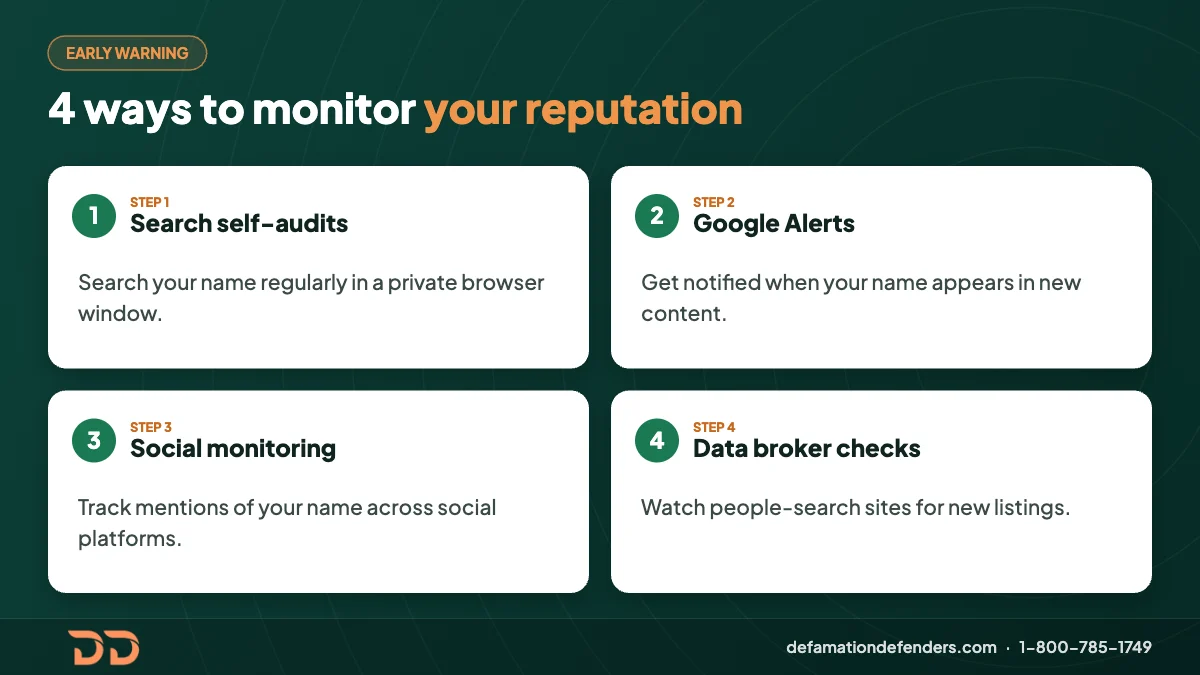
Search Engine Self-Audits
Search your name regularly on:
- Bing
- Yahoo
- DuckDuckGo
Use multiple formats:
- Full legal name
- Nicknames
- Professional name
- Variations with city and state
Document any harmful or inaccurate results.
Google Alerts
Google Alerts notifies you whenever your name appears online.
Set alerts here: https://www.google.com/alerts
Create alerts for:
- Your full name
- Business name
- Brand keywords
- Variations and common misspellings
Social Media Monitoring
Monitor:
- Mentions
- Tags
- Hashtags
- Comments
- Direct messages
On platforms like:
- TikTok
- Twitter/X
Third-party social listening tools can help identify emergent threats.
Data Broker Monitoring
Your private details may show up on:
- People-search websites
- Public records portals
- Data aggregation platforms
Regular monitoring ensures quick removal before the information spreads.
Protecting Your Online Reputation Before Attacks Happen
Proactive protection limits the damage of future issues and strengthens credibility.
Strengthen Your Public Profiles
Make your online presence authoritative and trustworthy:
- Establish a professional website
- Maintain consistent social media profiles
- Publish expert content regularly
- Highlight key accomplishments
- Secure verification badges when eligible
Search engines reward consistency and authority.
Improve Privacy Settings Across Platforms
Every social media platform allows privacy customization. Adjust:
- Who can find your profile
- Who can tag or mention you
- Who can message you
- Who can view your content
This reduces unwanted exposure.
Remove Unnecessary Personal Information Online
Personal information makes you vulnerable to:
- Identity theft
- Harassment
- Impersonation
- Manipulated narratives
Remove unnecessary data from online profiles, directories, and data brokers.
Build a Library of Positive Content
Positive content acts as a buffer and strengthens your search results. Examples include:

- Blog posts
- Articles
- Press releases
- Thought leadership pieces
- Interviews
- Professional achievements
The more high-quality content you publish, the harder it becomes for negative content to gain visibility.
Responding to Online Attacks Effectively
Reputation defense requires well-structured response strategies.
Evaluate the Severity of the Attack
Not every negative comment requires full-scale intervention.
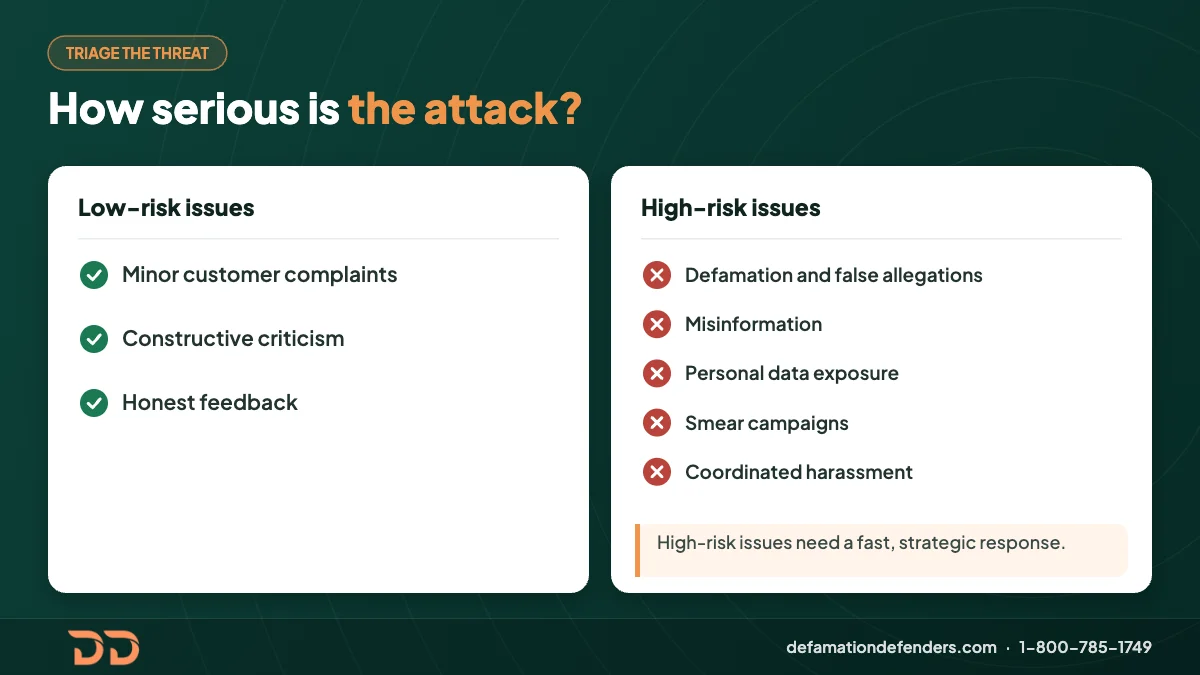
Low-risk issues:
- Minor customer complaints
- Constructive criticism
- Honest feedback
High-risk issues:
- Defamation
- Misinformation
- Personal data exposure
- Smear campaigns
- Coordinated harassment
- False allegations
High-risk scenarios require rapid, strategic responses.
Document Everything
Always capture:
- Screenshots
- URLs
- Account identifiers
- Timestamps
- Witness statements
Documentation may be needed for:
- Legal action
- Takedown requests
- Content removal filings
Request Removal from Platforms
Most platforms allow reports for harmful content.
Useful links:
- Facebook Reporting: https://www.facebook.com/help
- X/Twitter Safety Tools: https://help.twitter.com/en/safety-and-security
- YouTube Content Removal: https://support.google.com/youtube/answer/2802027
- Reddit Content Reporting: https://www.redditinc.com/policies/content-policy
Reasons to request removal include:
- Harassment
- Hate speech
- Defamation
- Privacy violations
- Copyright infringement
Contact the Website Owner Directly
Some websites respond faster when approached directly. Provide:
- Clear explanation
- Documentation
- Legal grounds (if applicable)
Sometimes editors or administrators will remove content voluntarily.
Submit Legal Takedown Requests
Legal grounds for removal include:
Defamation
False statements harming your reputation can be challenged with legal documentation.
Copyright Infringement
DMCA notices help remove unauthorized use of:
- Images
- Videos
- Written content
- Brand assets
More about DMCA: https://www.copyright.gov/dmca/
Privacy Violations
Publishing private information without consent may violate state or federal laws.
Using Positive Content to Rebuild Your Reputation
When negative content cannot be removed, suppression becomes essential. This involves creating and promoting positive, authoritative material to outrank harmful search results.
Publish SEO-optimized content
High-quality articles, posts, or videos help shift search rankings.
Update social profiles
Fresh, active profiles increase authority.
Launch a reputation-focused website
This helps you control your own narrative.
Use external publishing platforms
Examples include:
- Medium
- LinkedIn Articles
- Professional directories
Search engines prioritize reputable platforms, helping bury negative content.
Long-Term Reputation Defense Strategy
Your reputation needs ongoing care—not just one-time fixes.
Perform Monthly Reputation Audits
Evaluate:
- New search engine results
- Social media mentions
- Data broker entries
- Review sites
Respond to Threats Early
The longer harmful content remains online, the harder it is to remove.
Strengthen Professional Networks
Positive relationships help counter negative narratives.
Promote Transparency and Accountability
Clear communication builds credibility.
Protect Your Online Privacy
Privacy protection and reputation defense work together.
Reputation Defense for Businesses
Companies require additional layers of protection due to higher visibility.
Customer Review Management
Businesses face ongoing reviews on:
- Google Business Profiles
- Yelp
- BBB
- Trustpilot
Respond politely and professionally to legitimate concerns. Report fake or malicious reviews.
Brand Monitoring
Monitor mentions of:
- Company name
- Website URLs
- Products
- Key employees
Use brand monitoring tools to track sentiment.
Intellectual Property Protection
Ensure brand assets are not being misused online.
Crisis Response Planning
Every business should have a crisis communication plan detailing:
- Internal responsibilities
- Public messaging guidelines
- External communication channels
- Mitigation procedures
How Defamation Defenders Can Help
Defamation Defenders provides comprehensive reputation defense services, including:
- Removal of defamatory content
- Mugshot removal
- Suppression of negative search results
- Long-term online reputation management
- Social media takedown assistance
- Emergency response for smear campaigns
- Data broker removal and privacy protection
If harmful content, false accusations, or personal data exposure threaten your reputation, expert support ensures faster, more effective results.
📞 Request a confidential consultation:
https://defamationdefenders.com/contact
Frequently Asked Questions (FAQ)
It is the use of strategic methods to protect and restore your online image.
Often yes, depending on the source, content type, and legal grounds.
Suppression strategies can push harmful links down in search results.
Time varies—from weeks to months—depending on the complexity of the situation.
Sometimes. Professional guidance helps determine when to respond and when to remain silent.
Yes. Defamation law protects against false, harmful statements.
Many mugshot sites accept removal requests or require documentation of record clearance.
MLA Citations
Federal Trade Commission. “Protecting Against Online Threats.” FTC.gov, https://www.ftc.gov.
Google. “Remove Outdated Content.” Google Search Console, https://search.google.com/search-console/remove-outdated-content.
U.S. Copyright Office. “DMCA Provisions.” Copyright.gov, https://www.copyright.gov/dmca/.
Meta Platforms. “Community Guidelines.” Facebook Transparency Center, https://transparency.fb.com.
Related Contents:
Want this content gone? Get a free, confidential quote.
Send us the links. We'll reply with a firm quote and timeline. Most removals are done in a few days to a few weeks, with a full refund if we can't complete the agreed removal.
Pay-after-removal options · 4,000+ clients served · 4.9/5 on Google
Prefer to talk? Call 1-800-785-1749
