
Estimated reading time: 6 minutes
Quick service restaurants (QSRs) operate in a fast-paced and fiercely competitive environment where brand reputation can be the make-or-break factor for long-term success. A single negative review, viral tweet, or food safety incident can damage years of brand loyalty and diminish customer trust almost overnight. That’s why QSR reputation management isn’t just important—it’s absolutely critical.
Need help with this? Our business reputation management service can handle it for you, starting with a free, confidential review and a firm quote before any work begins.
This guide covers comprehensive strategies to safeguard your restaurant’s image, build positive public perception, and maintain an online presence that attracts foot traffic and earns repeat business. Whether you run a franchise or an independent QSR, implementing these proven strategies will help protect your brand and position your restaurant as a trusted go-to spot.
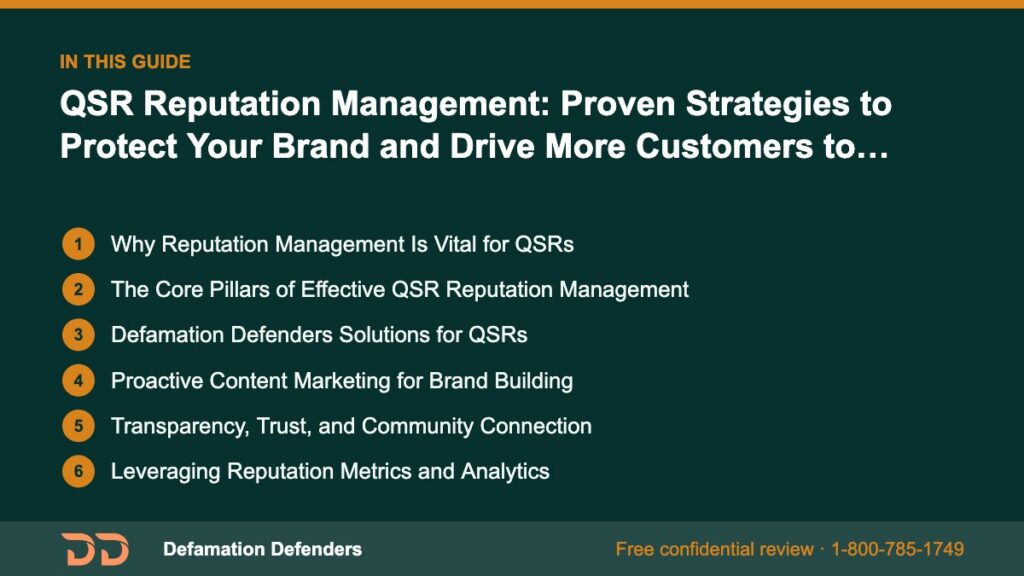
Table Of Content
Why Reputation Management Is Vital for QSRs
Quick service restaurants rely heavily on public perception, word-of-mouth marketing, and online reviews. The modern customer journey often begins with a search—”best burger near me” or “fast tacos downtown”—and online feedback largely determines where diners decide to eat. Here’s why reputation management is non-negotiable:
- Real-time reviews influence immediate decisions
- Social media backlash spreads rapidly
- Google ratings impact local SEO visibility
- Trust and transparency affect brand loyalty
- Operational issues become public crises if unaddressed
According to BrightLocal (2024), 91% of consumers aged 18-34 trust online reviews as much as personal recommendations. For QSRs, where high volume and fast turnover are standard, this can either be a goldmine or a public relations nightmare.
Want this content gone? Get a free, confidential quote.
Send us the links. Most removals are done in a few days to a few weeks, with a full refund if we can't complete the agreed removal.
The Core Pillars of Effective QSR Reputation Management
1. Online Review Monitoring and Response
Monitoring:
- Set up alerts with tools like Google Alerts, Yelp for Business, and social listening platforms.
- Use platforms like ReviewTrackers, Yext, or Sprout Social for centralized management.
Response Strategy:
- Respond to every review—both negative and positive.
- Be polite, professional, and empathetic.
- Take issues offline when necessary (e.g., “We’d love to resolve this—please contact our GM at [email]).
Pro Tip: Avoid canned responses. Tailor your message to the reviewer’s comments.
2. Local SEO Optimization for Visibility
If your restaurant doesn’t appear in the top 3 local results on Google Maps or Google Search, you’re missing out on a massive chunk of business.
Key actions include:
- Claim and fully complete your Google Business Profile
- Ensure consistent NAP (Name, Address, Phone number) across all listings
- Add high-quality photos of your food, interior, staff, and menus
- Include updated service details (e.g., dine-in, curbside, delivery, hours)
- Use relevant QSR-related keywords: “best fast food,” “quick bite near me,” “cheap eats downtown”
Check out Google’s official guidelines on how to improve your local ranking.
3. Social Media Engagement and Crisis Control
Social media can fuel your QSR’s growth—or tarnish your brand overnight. You need:
- A content calendar with value-driven and appetizing posts
- Fast responses to customer questions and complaints
- A crisis playbook for handling viral negative feedback or employee misconduct
Checklist:
- Assign roles to community managers or staff
- Prepare PR scripts in advance for likely scenarios (e.g., food safety incident)
- Avoid deleting negative comments unless they violate terms
4. Employee Reputation Management
Customers judge your business based on staff behavior. A rude cashier or unsanitary cook can create viral nightmares. Train employees in:
- Professional customer service
- Proper hygiene and food handling
- Conflict de-escalation
- Posting policies for social media (including what’s not allowed)
Internal audits and anonymous feedback channels can also help you spot potential issues before they escalate.
5. Customer Experience and Loyalty Programs
Improving the on-site experience reduces the chance of negative reviews. Consistency is key.
Ways to elevate experience:
- Streamlined ordering (including kiosks and apps)
- Prompt and courteous service
- Clean, inviting spaces
- Prompt issue resolution
Loyalty programs like punch cards, rewards apps, or free items for return visits create positive brand associations and word-of-mouth buzz.
Defamation Defenders Solutions for QSRs
When your restaurant is under attack from online defamation, smear campaigns, or false reviews, turn to Defamation Defenders. We provide QSR owners with:
- Strategic review removal and suppression
- Brand defense against slander and libel
- Google autocompletion cleaning
- Crisis response guidance
- Legal support for reputation-related cases
Our team understands the stakes and has helped numerous QSR franchises reclaim control of their reputation and protect their bottom line.
Proactive Content Marketing for Brand Building
Take ownership of your narrative by pushing out content that reflects your brand values.
Ideas include:
- Behind-the-scenes videos of your kitchen
- Employee spotlight features
- Interviews with your chef or founders
- Seasonal specials and new menu drops
Pair content with hashtags like #FastFoodLovers, #QSRDeals, #DriveThruFavorites to expand reach. Repurpose customer testimonials into shareable graphics.

Transparency, Trust, and Community Connection
People crave more than just fast food—they want trust, cleanliness, and familiarity. Your QSR brand should reflect that.
Actionable strategies:
- Highlight safety protocols post-COVID
- Partner with local charities or schools
- Join local chamber events
- Promote eco-friendly packaging or sustainable sourcing
This not only boosts brand image but also increases your chances of getting mentioned in local press or community blogs.
Leveraging Reputation Metrics and Analytics
Don’t guess—track your progress. KPIs for QSR reputation management should include:
- Average review rating over time
- Response rate and response time to customer reviews
- Sentiment analysis from social platforms
- Clicks and views on Google Business
- Changes in foot traffic or online orders
Platforms like Hootsuite, Brandwatch, and Reputation.com offer dashboards to monitor these insights.
Advanced Tactics for Competitive Edge
QSRs aiming for rapid growth can adopt these next-level tactics:
Hyperlocal Influencer Outreach
Collaborate with micro-influencers who focus on your geographic area. A food blogger with 5k local followers can bring in more business than a celebrity influencer with 1M global fans.
Search Engine Suppression of Negative Content
If damaging articles or blog posts appear in search results, Defamation Defenders can suppress them by creating optimized, truthful content that ranks higher.
Review Generation Software
Use platforms like NiceJob, Podium, or a CRM with review prompts to encourage satisfied customers to share their feedback. Text-based reminders post-visit can double your review volume.
Automation of Customer Engagement
Use AI-powered chatbots or loyalty apps to answer FAQs, offer discounts, and keep diners engaged long after their visit.
Frequently Asked Questions (FAQ)
You can flag the review directly on the platform, provide evidence it violates guidelines, and submit a dispute. If unsuccessful, consider hiring Defamation Defenders to escalate the issue professionally.
This may constitute online defamation. Keep records, respond carefully, and consult with Defamation Defenders for next steps, including potential legal action.
You cannot incentivize positive reviews, but you can ask for honest feedback. Be transparent and never manipulate your ratings.
It depends on the severity and the responsiveness of your efforts. In most cases, visible results start within 30–90 days when using professional help.
Platforms like Sprout Social, Birdeye, and ReviewTrackers offer robust tools for review management, sentiment tracking, and response automation.Rel
Related Contents:
Want this content gone? Get a free, confidential quote.
Send us the links. We'll reply with a firm quote and timeline. Most removals are done in a few days to a few weeks, with a full refund if we can't complete the agreed removal.
Pay-after-removal options · 4,000+ clients served · 4.9/5 on Google
Prefer to talk? Call 1-800-785-1749
