
Estimated reading time: 5 minutes
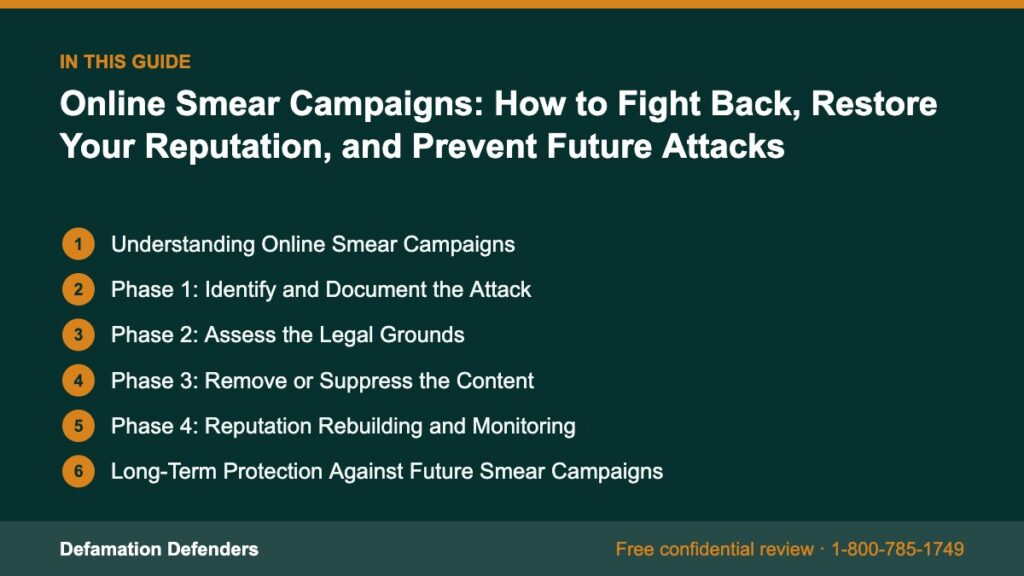
Table Of Content
Understanding Online Smear Campaigns
An online smear campaign is a coordinated effort to damage someone’s reputation through false, misleading, or malicious content published across the internet. This can involve fake reviews, defamatory blog posts, manipulated images, or fabricated news articles.
Need help with this? Our personal reputation repair service can handle it for you, starting with a free, confidential review and a firm quote before any work begins.
Common targets include:
- Business owners
- Public figures
- Private individuals in personal disputes
- Employees or whistleblowers
- Professionals like doctors, lawyers, or educators
Examples of Smear Campaigns
- Anonymous Reddit threads filled with libelous claims
- Fake social media profiles spreading lies
- False accusations posted to review sites like Yelp or Ripoff Report
- Doctored screenshots shared on forums or blogs
These campaigns are often hard to trace and can cause significant personal, professional, and emotional harm.
Phase 1: Identify and Document the Attack
Before taking action, gather evidence of the attack.
What to Look For:
- Exact URLs of defamatory posts
- Screenshots of social media posts or comments
- Search engine results linking your name to false claims
- Hosting domains and usernames, if possible
Tips:
- Use Google Alerts to track new mentions
- Search your name using incognito mode to avoid personalization
- Archive content with archive.today or Wayback Machine
Phase 2: Assess the Legal Grounds
Smear campaigns may involve multiple legal violations. Here’s what you should assess:
Defamation
To qualify as defamation, a statement must:
- Be false
- Be published to a third party
- Cause reputational or financial harm
Libel (written defamation) online is actionable in most U.S. jurisdictions.
Harassment or Cyberbullying
If you’re being threatened, stalked, or harassed, legal remedies include:
- Restraining orders
- Cease and desist letters
- Cyber harassment criminal complaints
Doxxing
Public exposure of your address, phone number, or family details without consent can trigger:
- Privacy rights enforcement
- Terms of service violations (to report and remove)
Intellectual Property Violations
If stolen photos, videos, or copyrighted material are used:
- Issue DMCA takedown notices
- Report to hosting platforms and search engines
False Light and Invasion of Privacy
False representations that are misleading, even if not technically defamatory, may still be grounds for legal action under the false light doctrine or invasion of privacy laws. These apply especially when:
- Images are used out of context
- False statements portray someone inaccurately to the public
Workplace Defamation
If a smear campaign interferes with your employment or was initiated by a coworker, employer, or competitor, it may fall under workplace defamation or professional misconduct laws. Legal remedies may include:
- Filing complaints with HR or professional boards
- Initiating defamation claims for loss of income or job opportunities
Phase 3: Remove or Suppress the Content
Not all platforms offer takedown options, but many have clear abuse policies.
How to Request Removals
- Google: Use Google’s Content Removal Tool
- Social Media: Report abusive accounts/posts on platforms like Facebook, Instagram, X/Twitter, or TikTok
- Web Hosts: Look up who hosts the defamatory website with WhoIs Lookup and file a complaint
- Content Platforms: Yelp, Trustpilot, Glassdoor, and others allow flagging and dispute options
Suppression via SEO
If removal fails, suppression is a powerful strategy:
- Create high-authority, keyword-optimized content
- Use PR, social media, and websites to outrank negative links
- Publish on platforms like Medium, LinkedIn, and press syndication outlets
Pro tip: Claim and optimize all major profiles like Crunchbase, Muck Rack, About.me, and Google Knowledge Panel.
Phase 4: Reputation Rebuilding and Monitoring
Clean Up Your Online Presence
- Remove outdated or vulnerable content
- Update your bios, websites, and professional listings
- Post accurate, positive information to dilute false content
Automate Monitoring
Set up these tools:
- Google Alerts
- Mention.com
- BrandYourself
- Talkwalker Alerts for deeper monitoring
Stay proactive to spot new attacks early.

Long-Term Protection Against Future Smear Campaigns
Smear campaigns often return in waves. Defense requires strategic action.
Secure Your Personal Info
- Opt out of people search sites (e.g., Whitepages, Spokeo)
- Use services like OptOutPrescreen
- Mask WHOIS info if you own domains
- Use a virtual business address instead of a personal one for registrations
Set Boundaries on Social Media
- Enable privacy controls
- Disable public comments or DMs
- Avoid oversharing details like your location or workplace
- Regularly audit your friends/followers list for potential bad actors
Crisis Management Plan
Have a plan in place with steps for:
- Immediate evidence capture
- Public response strategy (if needed)
- Contacting your attorney or PR firm
- Appointing a spokesperson if you’re a business or public figure
How Defamation Defenders Can Help
Defamation Defenders specializes in identifying, addressing, and resolving online smear campaigns. We provide:
- Content removal and suppression
- Online reputation cleanup
- SEO-based reputation defense
- Legal coordination with defamation attorneys
- Support for professionals, executives, and public figures
📞 Request a Free Case Evaluation
Take the first step toward restoring your name and peace of mind.
Frequently Asked Questions (FAQ)
Yes, if you can identify the perpetrator and prove defamation, harassment, or other legal violations.
Subpoenas can sometimes unmask anonymous posters. Alternatively, focus on platform policy enforcement and SEO suppression.
Google may remove content involving personal data, doxxing, or legal violations. However, pure defamation is often excluded unless proven in cour
Depending on the authority of the site and your own content strategy, suppression may take weeks to several months.
It varies. DIY strategies cost less but take more time. Professional services like Defamation Defenders offer faster, more comprehensive results.
Absolutely. Employers, clients, and colleagues often search names online. False accusations can lead to job loss, reduced business opportunities, and emotional stress.
Common platforms include Reddit, Twitter (X), Facebook, Ripoff Report, Google Reviews, and anonymous forums.
In most cases, it’s better to avoid direct public responses. It can escalate the situation or increase visibility. Consult with a reputation expert or attorney before responding.
MLA Citations:
- “Online Harassment and Cyberstalking Laws.” National Conference of State Legislatures, https://www.ncsl.org
- “How to Remove Personal Info from Google Search.” Consumer Reports, https://www.consumerreports.org
- “What is Doxxing?” Norton LifeLock, https://us.norton.com/blog/emerging-threats/what-is-doxxing
- “Online Defamation Law.” Legal Information Institute, Cornell Law School, https://www.law.cornell.edu/wex/defamation
- “Remove Content from Google.” Google Search Help, https://support.google.com/websearch/troubleshooter/3111061
Related Contents:
