
Estimated reading time: 6 minutes
Instagram is one of the most widely used social media platforms, with over two billion active monthly users. This massive reach makes it an attractive channel not only for businesses and influencers but also for those who wish to cause harm.
Need help with this? Our social media removal service can handle it for you, starting with a free, confidential review and a firm quote before any work begins.
Defamation on Instagram occurs when false statements are posted publicly with the intent to damage reputation. While the legal principles of defamation remain the same, the way falsehoods spread online is much faster and more damaging due to the viral nature of Instagram.
Common forms of defamation on Instagram include:
- Fake posts or memes mocking or falsely accusing a person.
- Defamatory captions or comments that misrepresent facts.
- Malicious hashtags linking your name or business with lies.
- Edited images or reels designed to humiliate or mislead.
- Anonymous smear accounts impersonating or targeting individuals.
Instagram blurs the lines between personal and public communication, making defamatory statements harder to contain and more damaging once shared.
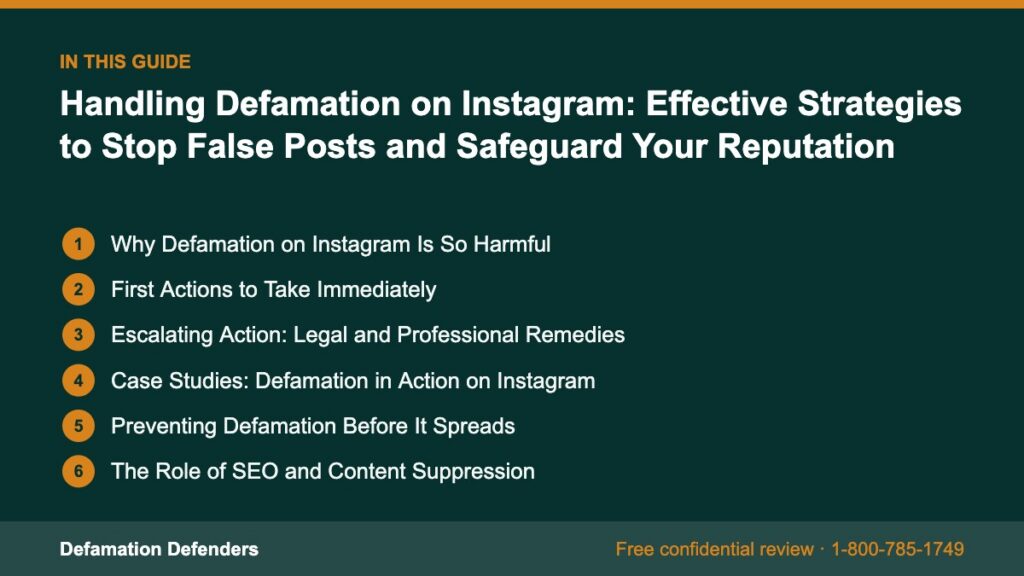
Table Of Content
Why Defamation on Instagram Is So Harmful
Reputation can take years to build, but only moments to destroy when misinformation circulates. Instagram’s algorithm and design intensify the harm:
- Virality – Posts can be reshared as stories, reels, or screenshots, amplifying damage.
- Permanence – Even after deletion, screenshots and reposts often persist.
- Public Accessibility – Harmful posts are often public, not just shared in private chats.
- Psychological Harm – Victims face emotional distress, social isolation, and anxiety.
- Professional and Financial Losses – Negative falsehoods may cost jobs, clients, sponsorships, or brand partnerships.
First Actions to Take Immediately
1. Gather and Preserve Evidence
The first instinct might be to delete, block, or move on. But legally and strategically, documenting everything is critical.
- Take screenshots of the defamatory content.
- Copy URLs of posts and profiles.
- Record dates, times, and usernames.
- Use archiving tools like the Wayback Machine or Notion to preserve records.
📌 Tip: Courts and legal professionals often require unaltered evidence. Keep raw files secure.
2. Report the Content to Instagram
Instagram’s Community Guidelines prohibit harassment, hate speech, impersonation, and false content.
How to report:
- Tap the three dots (…) above the post.
- Select Report → It’s inappropriate.
- Choose the relevant category: Harassment, Hate Speech, False Information, or Impersonation.
- Submit supporting information (include that it’s defamatory if relevant).
Reports are reviewed by Instagram’s moderation team. If approved, the content may be removed within hours to days.
3. Restrict, Block, or Mute
- Restrict: Prevents the offender’s comments from being widely visible without alerting them.
- Block: Completely cuts off their access to your account.
- Mute: Reduces exposure without blocking (useful in complex social or professional situations).
4. Contact the Poster Directly
If appropriate, a professional message can sometimes resolve the matter:
Hi [Username],
The content you posted contains false and damaging information about me.
Please remove it immediately to avoid further action.
Thank you.
Remain calm, factual, and professional. Aggressive responses may escalate the situation.
Escalating Action: Legal and Professional Remedies
Cease-and-Desist Letters
A formal letter from an attorney demanding removal of defamatory content often carries weight. While not a court order, it signals seriousness and may prevent further posts.
Filing a Defamation Lawsuit
If the content causes measurable harm, a lawsuit may be warranted. Key requirements for defamation cases:
- False Statement – The post must be untrue.
- Publication – It must be shared with others, not just said privately.
- Harm – Reputational or financial damages must result.
- Negligence or Malice – The poster acted carelessly or maliciously.
Legal remedies may include damages for financial loss, pain and suffering, and court-ordered removal of posts.
Unmasking Anonymous Posters
Defamatory accounts often hide behind anonymity. Courts can issue subpoenas compelling Instagram or ISPs to reveal identifying information.
Case Studies: Defamation in Action on Instagram
- Influencer Defamation Lawsuit (2021) – An influencer sued a former associate for spreading false cheating allegations on Instagram stories. The court awarded damages after proof of harm to sponsorship deals.
- Small Business Smear Campaign – A competitor created fake accounts to leave false negative posts about a restaurant. The owner’s evidence collection and legal team forced removal and restitution.
- Student Harassment Case – A high school student faced defamatory memes spread through anonymous Instagram accounts. The school intervened, and legal guardians pursued action to shut down the accounts.
These examples show that courts increasingly recognize Instagram defamation as serious and enforceable.
Preventing Defamation Before It Spreads
Build a Strong Reputation Buffer
When your reputation is strong, false claims are less likely to gain traction. Ways to reinforce credibility:
- Publish thought leadership content.
- Engage authentically with your audience.
- Respond transparently to questions or criticism.
Monitor Mentions and Activity
Use:
- Google Alerts for your name or business.
- Social listening tools like Mention, Brandwatch, or Hootsuite.
- Regularly review Instagram hashtags and tags for misuse.
Educate Your Audience
Followers who trust you are less likely to believe defamatory statements. Share updates, clarify rumors promptly, and remain consistent.

The Role of SEO and Content Suppression
Even if defamatory Instagram posts are deleted, their echoes often appear in search results. That’s where Defamation Defenders excels:
- Suppressing false results with positive, optimized content.
- Promoting accurate narratives about you or your business.
- Developing long-term reputation strategies to prevent future harm.
When handled effectively, harmful posts are buried beneath authoritative, positive results — minimizing their impact.
Proactive Checklist for Handling Instagram Defamation
- Document all evidence of false posts.
- Report content via Instagram’s tools.
- Block or restrict offenders.
- Contact poster directly if safe.
- Consult legal counsel for cease-and-desist or lawsuits.
- Engage Defamation Defenders for suppression and reputation restoration.
- Build proactive defenses with SEO and monitoring.
Frequently Asked Questions
Defamation must be a false statement of fact. Opinions (e.g., “I don’t like this person’s art”) are protected speech. False claims (“This person stole money from me”) may qualify as defamation.
Yes. Businesses have successfully pursued claims for false posts, especially if they impact revenue.
Immediately. Delay allows the post to spread further.
No. Reporting is anonymous.
Stories disappear after 24 hours, but screenshots and archives preserve evidence. Always document before it vanishes.
In most cases, no. Public disputes may amplify the defamatory post. Instead, act through reporting, legal channels, and professional support.
Why Choose Defamation Defenders
When Instagram defamation threatens your reputation, you don’t have to handle it alone. Defamation Defenders provides:
- Legal-grade takedown assistance
- Suppression of negative search results
- Reputation rebuilding strategies
- Ongoing monitoring and protection
👉 Work with Defamation Defenders today to restore your good name and protect your future.
Related Contents
