
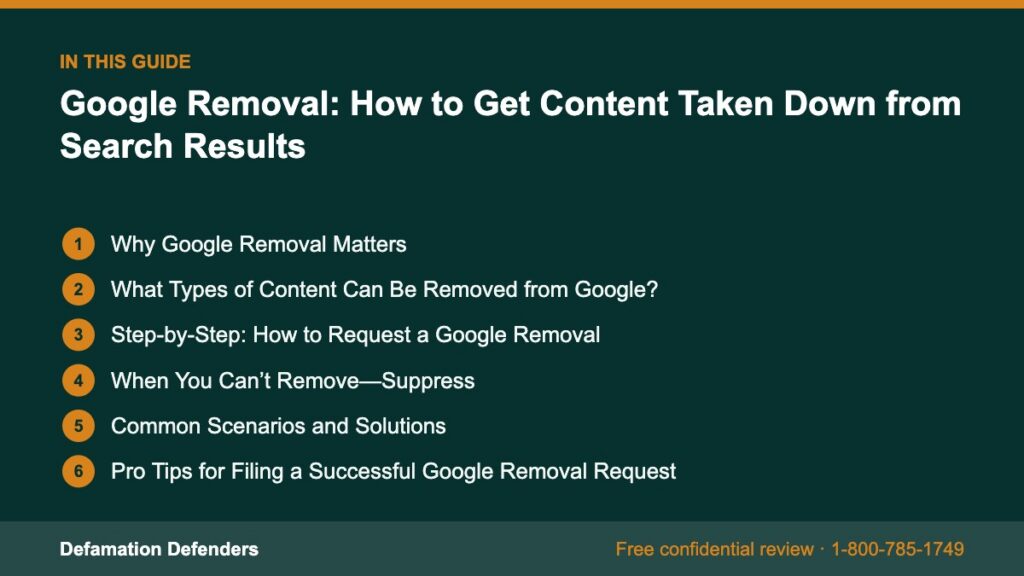
Table Of Content
Why Google Removal Matters
Search results are often the first impression others get about you or your business. A single damaging article, outdated court record, or false review can dominate your name’s search results for years. Google removal is a process that helps individuals and businesses take down or suppress misleading, harmful, or irrelevant content indexed in Google’s search engine.
Need help with this? Our search result suppression service can handle it for you, starting with a free, confidential review and a firm quote before any work begins.
Removing this content can restore your reputation, protect your privacy, and reclaim control of your online narrative.
A successful removal can reduce reputational risk, improve hiring outcomes, increase consumer trust, and eliminate barriers to business opportunities or personal growth.
What Types of Content Can Be Removed from Google?
Google will consider removal requests for content that falls under specific categories, such as:
- Personally Identifiable Information (PII) like social security numbers or financial details
- Revenge porn or non-consensual explicit images
- Outdated personal information (under the Right to Be Forgotten in some regions)
- Doxxing (non-consensual exposure of home addresses or private contact details)
- Medical and financial records
- Legal removals like DMCA takedown requests
- Defamatory content in some jurisdictions
- Non-consensual deepfakes or AI-generated likeness misuse
- Fake or impersonating social media profiles indexed in search
Google does not remove:
- Content just because it’s negative
- Truthful and legally published material
- Public records unless sealed or expunged
If your request is denied, suppression strategies become critical.
Step-by-Step: How to Request a Google Removal
Step 1: Identify the Problematic URL
Use Google Search to identify the exact URLs you want removed. Check all tabs: Web, News, Images, Videos. Don’t forget autocomplete suggestions—these can influence search behavior and may also be addressed through feedback.
Step 2: Determine the Type of Removal
Depending on the content, you may:
- Submit a legal removal request
- File a DMCA takedown notice
- Use the outdated content removal tool
- Request removal for personally identifiable information
- Report violations of local laws (EU privacy rulings, California data laws, etc.)
Step 3: File the Request with Google
Use the correct form:
- Remove Content for Legal Reasons
- Remove Outdated Content Tool
- Personal Info Removal
- Non-consensual Explicit Imagery
- Revenge Porn & Involuntary Imagery
Include:
- The URL of the content
- Search query that leads to it
- Description of the harm or legal issue
- Your contact information and signature
- Supporting screenshots or legal documents if applicable
Step 4: Monitor Progress
Google typically responds within 7–14 business days. You’ll receive updates via email or in Google Search Console if applicable. If denied, consider refining your argument or using an intermediary such as an attorney or removal service.
Step 5: Follow Up or Suppress
If the request is successful, the link will be removed from results. If denied, suppression through search engine optimization may be your best option.
When You Can’t Remove—Suppress
If Google denies your request or the content doesn’t meet removal criteria, consider search engine suppression, which involves:
- Publishing optimized content to outrank negative links
- Creating high-authority profiles (LinkedIn, Crunchbase, etc.)
- Using press releases, blogs, and guest posts
- Getting mentions in reputable directories
- Building backlinks to positive content
- Updating Wikipedia, local citations, and review platforms with fresh content
In many cases, the best defense is a flood of positive, branded content that reshapes what people see when they Google your name.
Common Scenarios and Solutions
1. Outdated Legal Record
- Use Google’s outdated content tool
- File a privacy complaint if the info no longer reflects your situation
- Request court sealing if allowed in your state
2. Defamatory Blog Post
- Attempt to contact the webmaster
- File a defamation claim (if applicable)
- Request search engine de-indexing with proof
- Suppress with positive brand stories and optimized content
3. Mugshots or Arrest Records
- Check state privacy laws
- File takedown with mugshot site, then request Google de-indexing
- Use suppression techniques if removal is not granted
4. Fake Reviews or Fraudulent Listings
- Flag review on Google Maps or Yelp
- Submit fraud claim to Google Business support
- Encourage satisfied clients to leave positive reviews
5. Personal Contact Info Exposure
- Report doxxing with Google’s PII form
- Use domain WHOIS to find the content host and submit a removal request
- Set up Google Alerts for reappearances
Pro Tips for Filing a Successful Google Removal Request
- Be specific and provide exact URLs
- Avoid emotional or vague language
- Provide supporting documents or screenshots
- Submit your request under the correct policy
- Be patient but persistent
- Use Google’s transparency report to track common removal reasons
“Google’s removal tools work best when used strategically, with legal grounds and well-documented evidence.” — Search Engine Journal

Why Google Sometimes Denies Requests
Google weighs public interest vs. personal privacy. If content is:
- Considered newsworthy
- About public figures
- Published by a credible source
…it’s less likely to be removed. That’s why many users rely on suppression and content marketing instead.
Another reason for denial may be insufficient documentation. Ensure your request includes:
- Clear explanation of harm
- Legal justification (e.g., defamation, copyright infringement, privacy breach)
- A connection between the content and your identity
How Google’s Policies Have Evolved
Over the years, Google has expanded removal options for:
- Financial fraud
- Identity theft
- AI-generated misinformation
- Sensitive location data (e.g., abortion clinics or LGBTQ+ centers)
Staying updated with Google’s removal policies ensures you take advantage of every option.
Defamation Defenders: Google Removal and Suppression Experts
At Defamation Defenders, we help individuals and businesses:
- File legally sound removal requests
- Draft and submit DMCA, privacy, and de-indexing notices
- Suppress unwanted content with proven SEO tactics
- Monitor brand mentions and search results
- Escalate takedown denials through legal or hosting channels
We understand Google’s policies inside and out—and we fight for your right to a fair online reputation.
👉 Request a free removal consultation today.
Frequently Asked Questions (FAQ)
No. Google only removes content that violates specific policies or laws.
No. Google may remove the link from search results without altering the source site.
Yes, if it meets removal criteria or is hosted on a platform you control.
No. Google removes the link from search visibility but not from the source site.
Not always. If reposted, it may appear again. Ongoing monitoring is critical.
File takedowns with the platform directly, then request Google de-indexing if needed.
Yes. We work with clients globally and understand regional takedown procedures.
For many clients, suppression offers a long-term brand control strategy with faster ROI.
